











What You Should Know About B2B Sales Processes: Features, Methods, and AI Tools

Selling to businesses is not as simple as peddling your wares directly to consumers. Your sales teams will need to buckle up for a long buyer journey that spans multiple decision-makers, relationships, and negotiations.
If you want your sales team to succeed, they’ll need effective strategies, easily replicable processes, and essential tech in their arsenal. Without them, it’s akin to having them go up a creek without a paddle.
For an effective B2B sales process, you’ll need to know not just what it is, but how to do it.
What is B2B sales?
Business-to-business sales refers to transactions between companies. In other words, B2B describes the process of one company selling a product or service to another company.
What makes B2B sales so challenging is that the sales process entails multiple decision-makers and a longer buyer’s journey than its business-to-consumer (B2C) counterpart.
B2B vs B2C: What’s the difference?
Unlike B2B, B2C sales involve businesses selling products or services directly to consumers.
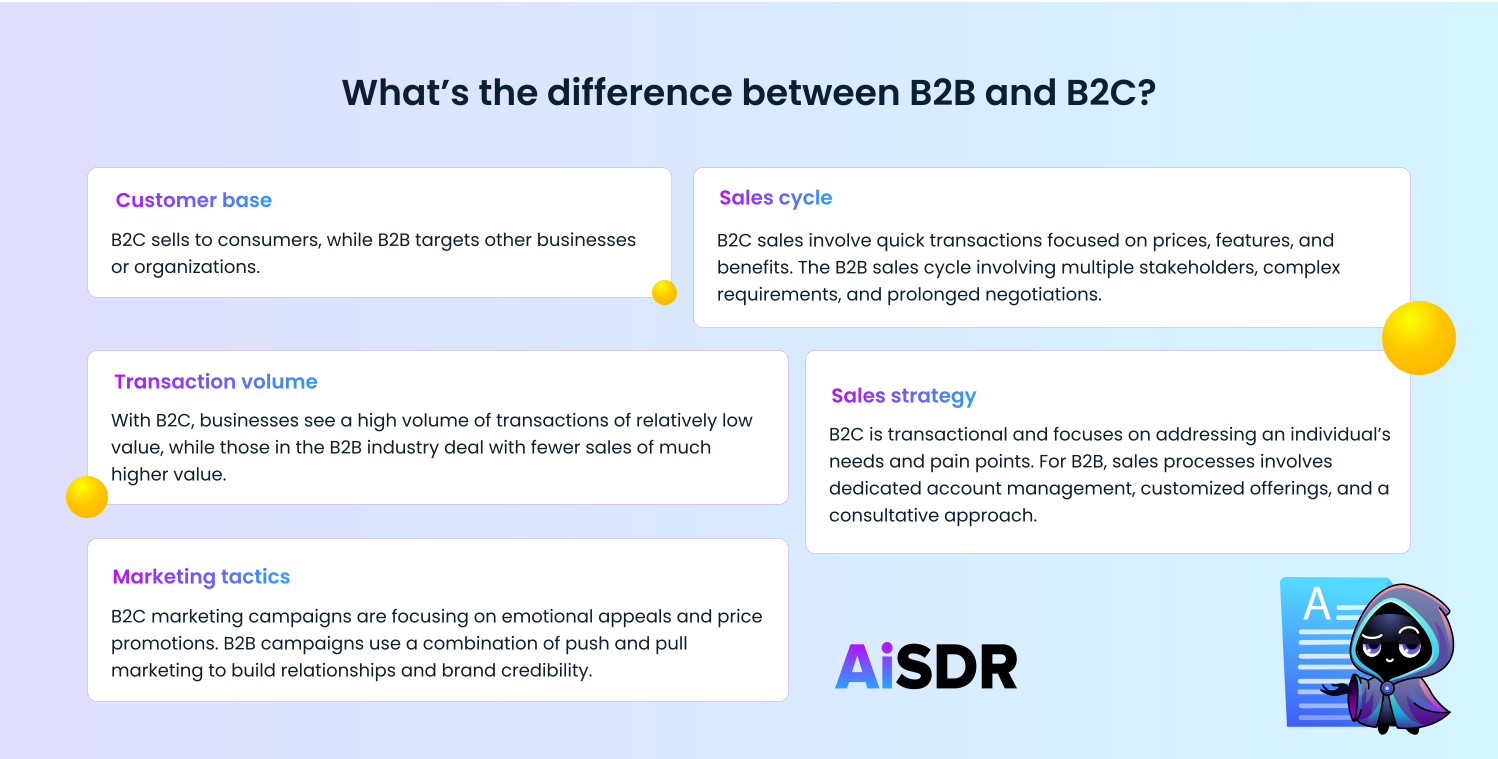
Here are the basic differences between B2B and B2C:
- Customer base – As mentioned above, B2C sells to consumers, while B2B targets other businesses or organizations.
- Sales cycle – B2C sales involve quick, straightforward transactions focused on prices, features, and benefits. The B2B sales cycle is far more complex, involving multiple stakeholders, complex requirements, and prolonged negotiations.
- Transaction volume – With B2C, businesses see a high volume of transactions of relatively low value, while those in the B2B industry deal with fewer sales of much higher value.
- Sales strategy – B2C is more transactional and focuses on addressing an individual’s needs, preferences, and pain points. The sales strategy for complex B2B sales processes involves dedicated account management, customized offerings, and a consultative approach.
- Marketing tactics – B2C marketing campaigns tend to be gimmicky, focusing on emotional appeals and price promotions. B2B campaigns are more protracted as they use a combination of push and pull marketing to build relationships and brand credibility.
Although B2B sales are much more complex than B2C, successful B2B sales have the potential for a much higher and more sustainable impact on your company’s bottom line.
Inbound vs outbound B2B sales: What’s the difference?
Depending on how your interaction with potential customers begins, B2B sales fall into two categories: inbound and outbound.
Inbound B2B sales
Inbound sales attract prospects who actively seek solutions, discovering your business through SEO and valuable content on their own. These leads tend to be self-qualified, often turning into buyers over time through ongoing, educational communication with the use of blog series, downloadable guides, webinars, and interactive demos.
For the inbound B2B sales process, teams use a variety of AI-powered tools. Hotjar, for example, analyzes visitor behavior, score leads, and tailors website experiences to prioritize high-intent prospects. Chatbots like Drift qualify visitors in real time and connect them to the right sales reps. AiSDR enhances email signature campaigns by providing analytics and engagement insights.
Outbound B2B sales
Outbound sales, on the other hand, involve your sales team proactively identifying and reaching out to target companies and contacts through emails, calls, LinkedIn messages, and creative gifting, often before prospects are aware of your offering.
Solutions like AiSDR automate prospect research, build deeply researched high-converting outreach, and manage follow-ups seamlessly. AiSDR delivers real-time alerts and buyer intent data to optimize outreach timing and messaging. Reachdesk streamlines personalized direct mail and gifting campaigns, integrating with sales platforms to trigger timely interactions.
Where inbound and outbound B2B sales meet
Quite different at first glance, both inbound and outbound B2B sales don’t exist in isolation and perfectly complement each other.
- Scenario 1: Reaching less active buyer personas. Some prospects actively research solutions and respond well to inbound efforts like content and webinars. Others — such as anonymous website visitors who find you but don’t make contact — may require targeted outbound outreach to encourage conversion.
- Scenario 2: Building relationships through social media activity. AI tools can help identify people who visit your LinkedIn profile, allowing you to reach out while you’re still on their radar. You can also engage with those who interact with your LinkedIn posts or other relevant social media content (even from competitors). This inbound engagement shows genuine interest, enabling you to send warmer, more confident outbound messages that address their specific challenges.
- Scenario 3: Managing prospects at different stages of the buyer journey. Outbound sales can initiate conversations with target accounts, while inbound efforts nurture their interest through helpful content and ongoing engagement, ensuring continuous connection throughout the journey.
- Scenario 4: Supporting product updates. Outbound sales communicate upcoming changes, while inbound teams provide guidance through resources like webinars and how-to guides.
- Scenario 5: Personalization. Inbound data like website visits and content downloads can be used to tailor and personalize outbound outreach.
Whatever approach you choose, B2B sales are essential for your bottom line.
Why are B2B sales essential for business prosperity?
B2B sales come with benefits that allow businesses to feed their bottom line without exhausting their resources.
Here’s how B2B sales can drive business growth:
With B2B sales, you might be playing the long game, but you’ll be reaping huge rewards if you do it right.
What are some examples of B2B use cases?
Here are some common B2B sales examples. There’s a good chance that you’ve encountered one or several of them at some point:
Company-wide software
B2B companies can sell to businesses that need digital products to improve their operations. SAP, for instance, sells enterprise resource planning (ERP) software to help companies streamline their core business processes, including HR, finance, and supply chain.
Consulting firms or development teams
A B2B company may offer services that enable other companies to grow their business or bring their vision to life. Accenture is an IT consulting firm that helps companies reach their full potential with the right tech products or digitalization strategies.
Data analytics services
Some B2B companies specialize in helping businesses make sense of their fragmented data. For example, Genpact boasts a team of 10,000 data specialists, all geared up to turn data into business intelligence.
To succeed in B2B sales, you need sales reps who are adept at pushing decision-makers to finally make that purchase.
Who is a B2B sales representative?
A B2B sales representative connects with corporate decision-makers to build relationships and encourage the purchase of products or services. They take responsibility for revenue growth, profit generation, and relationship building.
The must-have skills of a successful B2B sales rep in 2025
The essential skills of a sales rep in 2025 center on interpersonal insight and technical fluency.
First and foremost, active listening and a consultative mindset are essential. Today’s B2B buyers approach purchasing decisions more thoughtfully and deliberately. Sales reps must truly understand client needs, acting as valuable advisors rather than mere sellers.
Adaptability is equally important: your sales reps must be able to pivot as buyer behaviors and market conditions evolve. On the technical side, B2B sales professionals need to be confident users of CRM systems, sales engagement platforms, sales intelligence and prospecting tools, conversation intelligence tools, personalized video and digital sales rooms, lead and pipeline management automation solutions, and beyond, as well as effectively interpret buyer data from different sources.
Together, these skills lay a solid groundwork for an effective B2B sales process.
B2B sales process
The B2B sales process is a multifaceted journey that can be understood from two key perspectives: that of the customer and that of your sales team.
The customer’s perspective: What is the B2B sales funnel?
From the buyer’s viewpoint, the B2B sales process is best illustrated as a funnel – a customer-centric framework that breaks down the buying journey into clear, manageable stages.
This sales funnel offers a visual roadmap of how prospects move from their initial interaction with your brand to becoming loyal, paying customers. It serves as a valuable tool for sales and marketing teams to monitor, engage, and nurture leads throughout the entire journey.
While businesses may adopt various versions of the sales funnel, a comprehensive model often extends beyond the purchase itself and includes several critical stages:
Stage 1: Awareness.
At the top of the funnel, prospects recognize a problem or opportunity but may not yet know your solution exists. They begin searching for answers, often through inbound sales and marketing materials like blog posts
Stage 2: Interest.
At this stage, prospects are getting acquainted with your product or service. It’s a good time for sending a series of informative emails, free ebooks, and webinars, demonstrating the value of your product among other solutions.
[Get free guide] Outbound Playbook: From Prospect to Pitch
Stage 3: Consideration.
At this stage, your prospects are no longer just observing your brand and learning about the value you offer. They often seek product demos, read in-depth reviews and testimonials, attend webinars or product walkthroughs, and engage with your sales team to clarify doubts.
Your teams must be prepared to provide case studies and discuss the features and benefits of your offerings.
Stage 4: Intent
This is a critical stage of the sales funnel. The prospects are no longer just taking a cursory glance at your products or services. They’re now demonstrating a serious buying intent, visiting your product and pricing pages multiple times, asking questions, subscribing to your product newsletters (not just blogs or awareness ebook download sequences), interacting with your brand on social media, and beyond.
Stage 5: Evaluation.
Here, the prospects are getting ready to make a final purchase decision. They’ve probably seen your demos and explored the case studies. By now, they already know just how much the product or service would cost. But they’re still weighing their options, continuing to ask detailed questions to sales or support, and shopping around for the best deals.
Stage 6: Decision (purchase).
Here, the prospect officially converts into a paying client after a long B2B sales cycle. Negotiations and contract discussions often take place here.
Stage 7: Post-purchase.
The journey continues beyond the sale. This stage centers on onboarding, support, and ongoing engagement to ensure satisfaction and retention. Happy customers become repeat buyers and advocates, driving referrals and long-term growth.
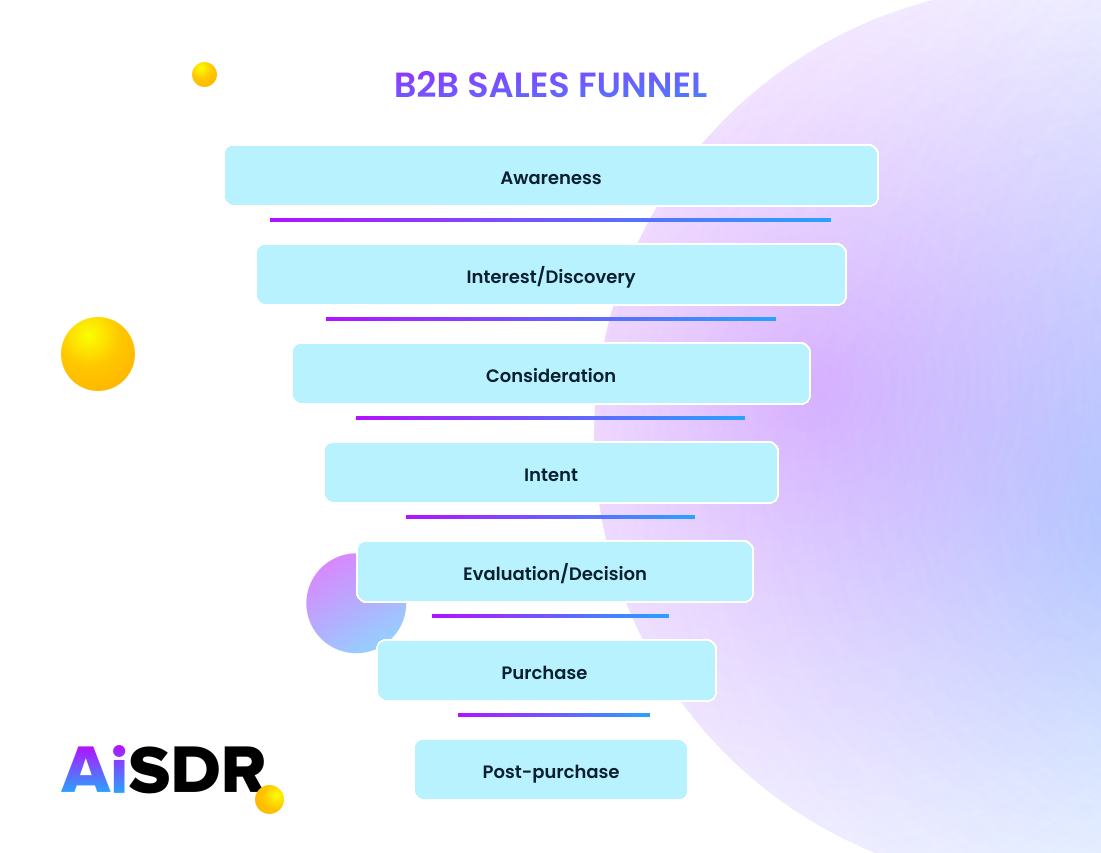
Note that leads don’t always move down the B2B sales funnel in a linear way.
They may enter and exit the funnels at different sales process stages. It’s the sales and marketing teams’ job to keep qualified leads on the course or even convince those who have exited to hop back.
Now let’s view the process from the B2B sales rep’s viewpoint.
The B2B SDR’s perspective: The seven steps of a high-performing sales process
Whatever the origins of the lead (inbound or outbound), from a sales representative’s point of view, the B2B sales process can be broken down into seven practical steps.
Prospecting
It all starts with finding and qualifying the right leads. This means identifying companies and decision-makers who fit your ideal customer profile. Potential customers can come from a variety of sources. Some prospects might discover your business through website visits, while others may be found via LinkedIn searches, contact lists, referrals, or industry events.
AI tools like AiSDR can make this easier by automating research and initial outreach, so you can focus on the most promising prospects.
Preparation
Before reaching out, SDRs have to understand what challenges the prospect is facing. Using CRM, browsing, social media, and other data, as well as AI insights, you can get a clear picture of their pain points and tailor your approach to show you genuinely understand their needs.
Initial approach
Your first contact needs to grab attention without overwhelming a prospect. Thanks to social media, this can take place as early as the awareness stage. Your sales reps can actively stir conversations on channels where your target audience already hangs out, creating authentic connections that set the foundation for deeper relationships.
AI can help you create the right message at the right time to make a strong first impression.
Presentation
This phase can span several stages of the sales funnel, including interest, consideration, intent, and evaluation.
Don’t push your customer to close a deal. You can start by validating their problem and gently offering solutions. Once your leads are warmed up and re-classified as marketing-qualified leads (MQLs), you might proceed by presenting the features and benefits of your offerings. When they show more interest, double down on it with product-focused webinars, demos, or free trials.
Handling objections
Objections are part of the process. To handle these, your sales reps must be equipped with effective negotiation tactics and closing skills. They should use relevant data and examples that speak directly to the prospects’ business.
Meanwhile, AI tools can help your reps anticipate common concerns and prepare clear, confident responses to keep the conversation moving forward.
Closing
Closing the deal means being ready to address final questions, negotiate terms, and follow up quickly when prospects show buying signals. Leveraging urgency, discounts, and attractive service-level agreements can come in handy during this stage.
AI alerts can help you stay on top of these moments.
Follow-up
Although the deal is now sealed, the job of the sales teams is not over. Early on, you should strive to retain the client and pave the way for repeat purchases. A seamless onboarding process is critical, as it leads to higher customer satisfaction and retention. In fact, 82% of businesses consider the onboarding process a crucial value driver that increases the worth of their product or service offerings.
This seven-step plan is a proven path to turning potential buyers into enthusiastic advocates for your brand, but its success depends on starting with high-quality leads. Without the right prospects, even the best process can fall short.
Frameworks + AI: The winning formula for lead scoring and qualification
A high-performing B2B sales process hinges on the ability to quickly and accurately identify which leads are worth pursuing. Combining the following qualification frameworks with AI-driven tools like AiSDR can greatly assist your reps during this process.
| Name | The main idea | Qualification steps | How it combines with AI |
| BANT (Budget, Authority, Need, Timing) | Helps sales teams qualify prospects based on their budget, level of authority, need, and timing | Budget: Does the prospect have the resources?Authority: Are you speaking with the decision-maker?Need: Is there a genuine problem your solution addresses?Timing: Is there urgency to act now? | AI can automate BANT by gathering data from public sources, analyzing prospect responses, and even transcribing and summarizing sales calls to flag key BANT criteria. |
| CHAMP (Challenges, Authority, Money, Prioritization) | Shifts the focus to the prospect’s core challenges before discussing budget or authority, making it highly customer-centric | Challenges: What pain points need solving?Authority: Who is involved in the decision?Money: Is there budget alignment?Prioritization: How urgent is the need? | AI supports CHAMP by surfacing relevant pain points from digital interactions, mapping organizational hierarchies, and dynamically scoring urgency based on prospect behavior. |
| MEDDIC (Metrics, Economic Buyer, Decision Criteria, Decision Process, Identify Pain, Champion) | Tailored for complex, high-value B2B deals | Metrics: What measurable outcomes matter?Economic Buyer: Who controls the budget?Decision Criteria/Process: How will the decision be made?Identify Pain: What are the business drivers?Champion: Who will advocate internally? | AI streamlines MEDDIC by tracking engagement with key stakeholders, extracting metrics from conversations, and alerting reps to shifts in buying committee dynamics. |
| SPICED (Situation, Pain, Impact, Critical Event, Decision) | A modern, consultative approach | Situation: What’s the current state?Pain: What problems exist?Impact: How does this affect the business?Critical Event: Is there a trigger or deadline?Decision: What is the buying process? | AI tools can analyze digital footprints to identify pain and impact, monitor for critical events (like funding rounds or product launches), and recommend next steps for each decision-maker. |
Modern CRM systems allow you to embed lead scoring models directly into your sales workflows. Scores update in real time as prospects engage with your brand, ensuring sales teams always have the latest insights for prioritization. This automation enables seamless handoff between marketing and sales, and ensures no high-potential lead slips through the cracks.
Aside from proper qualification, another building block towards a loyal customer is a well-crafted sales strategy. It will ensure that your nurturing campaign works toward broader sales objectives.
B2B sales strategy
A B2B sales strategy is a clearly structured plan that helps you find, engage, and convert other businesses into paying clients. Given the complexity of B2B sales—bigger deals, longer decision-making, multiple stakeholders—having a solid strategy is key to success.
Let’s discuss in more detail why a B2B sales strategy is a must-have:
- Complex decisions. In B2B, the buying process involves an average of five people. A clear strategy helps navigate the conversations and get everyone on board.
- Longer sales cycles. B2B deals often take more time to close than B2C sales. Case in point, 82% of businesses take between one and six months to evaluate software before purchasing. A well-structured approach keeps things moving smoothly.
- Larger deals. B2B sales usually mean bigger contracts, so your strategy needs to focus on making the price and value clear for both parties.
- Building long-term relationships. Making a sale is just the beginning. You want to keep the relationship going with great customer service, follow-ups, and possibly additional sales down the road—and this requires a strategy.
To design a successful B2B sales strategy, you must know your target, properly communicate your value, set up a well-structured process, and use the right tools to close more deals.
We’ll discuss a few effective approaches in the next section.
Common B2B sales strategies that work
B2B sales involve a lengthy, resource-intensive deal cycle. You can make your efforts count with these battle-tested strategies.
Targeted account-based marketing (AMB)
Account-based marketing is a B2B sales strategy that pours resources into specific target businesses. The sales and marketing teams engage in personalized campaigns geared at the unique features and pain points of the target accounts.
Thought leadership content
A B2B thought leadership content strategy entails creating and distributing high-quality content that showcases your expertise and establishes your organization as the industry leader. This means producing articles, podcasts, videos, webinars, and other types of content that provide insights and solutions that resonate with your prospects.
CRM and sales automation tools
We’ve said it before, and it’s worth repeating: the right tech tools are key to effective sales operations. They allow sales reps to easily find the information they need to keep conversations consistent and meaningful. Customer 360 by Salesforce, for instance, can help your teams personalize various touchpoints along the customer journey.
Salespeople can delegate repetitive tasks to sales automation tools, freeing up more bandwidth for value-added services. For example, AiSDR can quickly sort the leads and nudge them down the sales funnel until they’ve booked a call with the sales reps.
Let’s explore AiSDR and other top sales tools in more detail.
📈 Clients count on AiSDR
AI tools in B2B sales
Proper B2B sales enablement tools can accelerate sales, cutting costs and making your sales teams much more effective. The following AI-powered tools are just what you need.
AiSDR
AiSDR is an AI-powered sales tool that completes the tasks of a sales development rep faster and more efficiently. The AI SDR agent speeds up the sales cycle while reducing operational costs.
Features
Pricing: $250 per month
Have a conversation with our AI

ZoomInfo
ZoomInfo provides sales intelligence data that shows B2B companies which customers to reach and how.
Features
Pricing: Starts at $15,000 annually
Mailtastic
Mailtastic makes it easy to manage your employees’ email signatures and use them to display marketing banners.
Features
Pricing: available upon request
Reachdesk
Reachdesk boosts engagement with data-driven gifting, allowing you to feed your pipeline with more leads and convert more prospects.
Features
Pricing: Starts at $20,000 annually
Trumpet
Trumpet drives revenue by improving buyer journeys with personalized and interactive microsites.
Features
Pricing:Starts at $37 monthly
Hotjar
Hotjar tracks how users interact with your digital product to optimize user experiences and boost conversion.
Features
Pricing: Starts at $32 monthly
Incorporating these tools into your daily operations will make your sales processes much more efficient and your sales reps much more productive.
How can you be confident that your operations are actually becoming more efficient? Here are a few metrics.
Free guide

How does AI resolve the key challenges in the B2B sales process?
AI tools like AiSDR are reshaping how B2B sales teams address core challenges in the sales process.
- For long sales cycles and the complexity of multiple decision-makers, AI-powered software like AiSDR automates lead qualification and persistent nurturing through personalized, multi-channel outreach. It combines email, LinkedIn, and SMS and powers them with data from hundreds of sources. This keeps prospects moving forward without overburdening sales reps.
- To combat low email reply rates, AiSDR and similar tools generate highly tailored messages based on real-time intent signals and prospect behavior, significantly increasing open and response rates. They can also jump in immediately when someone responds, keeping the conversation going smoothly and speeding up the sales process.
- On the issue of data silos between sales and marketing, tools like AiSDR integrate smoothly with CRM platforms like HubSpot, syncing contacts and updating records automatically to provide a unified view of customer interactions.
But how can you be confident that your software tools and other B2B sales efforts are actually improving your sales? Here are a few metrics.
How do you measure B2B sales performance?
Tracking B2B sales performance is all about understanding what really works and what needs improvement. Keep an eye on the following key metrics:
Revenue metrics (or How much money are you making?)
Why it matters: Your ultimate goal is to drive revenue. These metrics help you track the money flowing into your business and show whether your sales efforts are paying off.
- Total revenue: The total amount of money your sales team generates from both new deals and existing customer renewals.
- Revenue growth: How does your current revenue compare to last month or last year? This figure shows your overall growth.
- Average deal size: A typical value of deals you close. This metric shows the impact of each sale.
Lead metrics (or How good are you at finding new business?)
Why it matters: Measuring how many leads you bring in and how well you convert them tells you whether you’re building a strong sales pipeline.
- Lead generation: How many new leads are you attracting? This figure shows whether your marketing and outreach are successful at bringing in fresh prospects.
- Lead conversion rate: Of all the leads you get, how many turn into customers? A higher conversion rate means your team is effectively turning interest into actual sales.
- MQLs vs SQLs: Marketing-qualified leads (MQLs) show interest, while sales-qualified leads (SQLs) are ready for direct sales. By tracking this correlation, you can see how well your marketing and sales teams work together.
Sales cycle metrics (or How fast are you closing deals?)
Why it matters: In B2B sales, time is money. Knowing how quickly you can move from lead to closed deal is crucial for accurate forecasting and efficiency.
- Sales cycle length: How long does it typically take to close a deal? Shorter cycles can improve cash flow, while longer ones might signal bottlenecks.
- Time to first contact: How quickly does your sales team follow up with new leads? Fast follow-ups often make closing deals more likely.
- Sales pipeline velocity: How fast are deals moving through your sales pipeline? A quicker pace translates into more sales and revenue.
Win rate (or How good is your team at closing deals?)
Why it matters: A high win rate means your sales reps effectively convert opportunities into customers. This is one of the most direct indicators of sales team success.
- Close rate (win rate): This shows the percentage of deals won vs. those lost. Higher win rates mean your sales team is great at closing.
- Opportunity-to-deal conversion: This measures how many opportunities (qualified leads) end up as closed deals. It’s a great way to track your sales reps’ performance.
Sales team performance (or How is each rep doing?)
Why it matters: Every member of your sales team contributes to the overall success. Tracking individual performance can help you identify top performers and areas where others need support.
- Quota attainment: Are your sales reps hitting their targets? This metric shows whether your team is on track to meet the company’s sales goals.
- Sales activity: How much activity is each sales rep generating (calls, emails, meetings)? This tells you how much effort is being put into the sales process.
- Individual conversion rate: How effectively is each rep converting leads into customers? Compare this across your team to see where coaching is needed.
Customer metrics (or How happy are your customers?)
Why it matters: B2B sales is all about building lasting relationships. If customers are happy, they stay longer, buy more, and bring in new clients. Tracking customer satisfaction helps you maintain long-term partnerships.
- Customer retention rate: How many customers stick around after their first purchase? Retaining customers is cheaper than acquiring new ones, and happy clients are often your best advocates.
- Churn rate: This is the flip side of retention. It tracks how many customers stop using your product or service. A low churn rate means you’re keeping clients happy.
- Lifetime value (LTV): How much revenue does a customer bring in over their lifetime? The higher this number, the more value you get from each client.
- Net promoter score (NPS): A simple but powerful metric that asks your customers how likely they are to recommend your business. A high score indicates strong satisfaction.
Profitability metrics (or Are you making money?)
Why it matters: It’s important to track not just how much money you’re making, but how much you’re actually keeping. These metrics show whether your sales efforts generate a good return on investment.
- Cost of acquisition (CAC): How much does it cost to acquire a new customer? A lower CAC signals that you’re using your sales and marketing dollars efficiently.
- CAC:LTV ratio: This metric compares how much you spend to acquire customers to how much they bring in over time. A healthy ratio shows that your business is growing profitably.
- Gross margin: The money you keep from each sale after you cover the costs. A higher gross margin means you’re running an efficient, profitable business.
Forecasting and pipeline metrics (or How well are you predicting sales?)
Why it matters: Accurately predicting future sales is critical for planning and resource allocation. These metrics help you understand whether your sales pipeline is healthy and if you’re likely to hit your targets.
- Sales forecast accuracy: Are your sales predictions close to the actual outcomes? More precise forecasts mean better planning and resource management.
- Pipeline health: Are you filling your pipeline with enough quality opportunities to meet your sales goals? Review your pipeline health regularly to avoid surprises down the road.
Customer feedback (or How are customers feeling?)
Why it matters: Customer feedback highlights what you’re doing right, what needs improvement, and where you could strengthen the relationship.
- Customer surveys: Regular surveys can give you a quick snapshot of how your customers feel about your product, service, and overall experience.
- Referrals and testimonials: Happy customers often become your best salespeople by referring others or providing glowing testimonials.
To measure B2B sales performance, focus on a mix of key metrics like revenue, lead generation, win rates, and customer satisfaction. By tracking these, you’ll have a clear picture of what’s going well, where to improve, and how to keep your sales engine running smoothly.
However, you should go beyond tracking your current performance and anticipate the future. Let’s see what’s on the horizon of B2B sales.
What is the future of B2B sales? The main trends reshaping the B2B sales landscape in 2025
B2B businesses need to keep up with fast-evolving technology and increasingly demanding customers. Here’s a look at what’s ahead for B2B sales:
AI-powered lead scoring and routing
Instead of guessing which leads are worth chasing, AI analyzes data like company information, buyer behavior, and how engaged they are to score each lead. After that, it automatically routes these top leads to the right sales reps based on things like their expertise and current workload.
Key tools: Salesforce Einstein, HubSpot AI, Leadfeeder, etc.
AI-powered predictive analytics
By crunching historical data, buyer behaviors, and external signals, AI models can accurately forecast sales opportunities and refine their strategies. For example, by predicting which deals are most likely to close and when, sales teams can focus on high-value prospects and shorten sales cycles.
Key tools: Predictive analytics platforms, CRM systems with AI capabilities (Salesforce, HubSpot), and business intelligence tools (Tableau, Power BI).
Self-service B2B buying journeys
B2B buyers are increasingly taking control of their purchase process, preferring self-service options that let them research, compare, and even purchase without direct sales involvement until later stages. To support buyers’ independence, this shift demands that companies provide intuitive websites, detailed product information, and AI-powered chatbots, while staying ready to engage when needed.
Key tools: Website builders (Wix), CRM systems and other platform types that aggregate data (Salesforce, HubSpot), and AI-powered chatbots.
Generative AI for content and messaging
Generative AI is changing how B2B sales teams create content and messages. It helps by quickly generating personalized emails, proposals, and marketing materials that really speak to individual customers. By analysing customer behavior and past interactions, GenAI tools create content that feels relevant and interesting.
Key tools: HubSpot AI, Jasper AI, Outreach, AiSDR, etc.
AI-powered sales playbooks
In 2025, AI-driven sales playbooks that tailor sales tactics in real time are becoming essential for sales teams. These dynamic guides use AI to analyze past interactions, customer data, and market trends to recommend the best next steps for each deal.
Key tools: AI-powered platforms that apply AI to analyze CRM data and customer behavior, scoring leads, and suggesting the best next actions (Salesforce Einstein, AiSDR)
Account-based marketing (ABM) takes center stage
ABM has been a growing trend in B2B, and it’s set to become even more important. Instead of casting a wide net, sales teams are focusing on specific companies that are the best fit for their products or services.
Key tools: ABM platforms like Terminus and Demandbase that assist with targeting, advertising, and measuring success; sales automation tools like AiSDR with visitor tracking features to facilitate targeted and personalized handling of accounts.
Free guide
More personalized and consultative selling
Buyers expect more personalized experiences and a deeper understanding of their business challenges. In the future, sales teams will shift from a transactional approach to a more consultative model, focusing on solving customer problems and delivering value rather than just closing deals.
Key tools: Data analytics, customer feedback, and advanced CRM systems to better understand customer behavior and tailor outreach.
Microsites and video demos
As opposed to educational materials like guides, microsites tailored to specific prospects and immersive video demos allow buyers to explore solutions at their own pace. This approach makes complex products easier to understand and accelerates decision-making.
Sales enablement and training
As the B2B sales environment becomes more complex, sales teams will experience a greater need for continuous learning and development. Sales enablement tools will help reps access the right content, training, and resources at the right time.
The future of B2B sales is all about adaptation—embracing new technologies, adjusting to changing customer expectations, and building deeper, more personalized relationships with clients.
To stay ahead, sales teams will need to master data analytics, AI, and automation while focusing on long-term customer experience and sustainable practices. And the right tools are a must.
Scale your B2B sales process using AiSDR
Due to its complexity, B2B can be far more challenging than B2C. At the same time, if you can unlock quality B2B deals, you’ll build a steadier stream of revenue than if you relied solely on individual customers.
In order to pursue profitable B2B opportunities, you’ll want to consider equipping your team with an AI sales tool that helps you scale your pipeline in a cost-effective manner.
As an end-to-end email outreach platform, AiSDR will nurture leads, hyper-personalize content, send follow-ups, and book meetings on full autopilot.
Book more, stress less with AiSDR
FAQ
What are the key features behind an effective B2B sales process?
An effective B2B sales process lets your teams track leads along a sales funnel. This makes it easier to nurture prospects and nudge them to become paying customers.
What challenges do companies face when striving for effective B2B sales?
B2B sales involve a long buyer journey and multiple decision-makers. Sales teams must be prepared to play the long game, practicing dedicated account management and building meaningful relationships.
What is B2B lead generation?
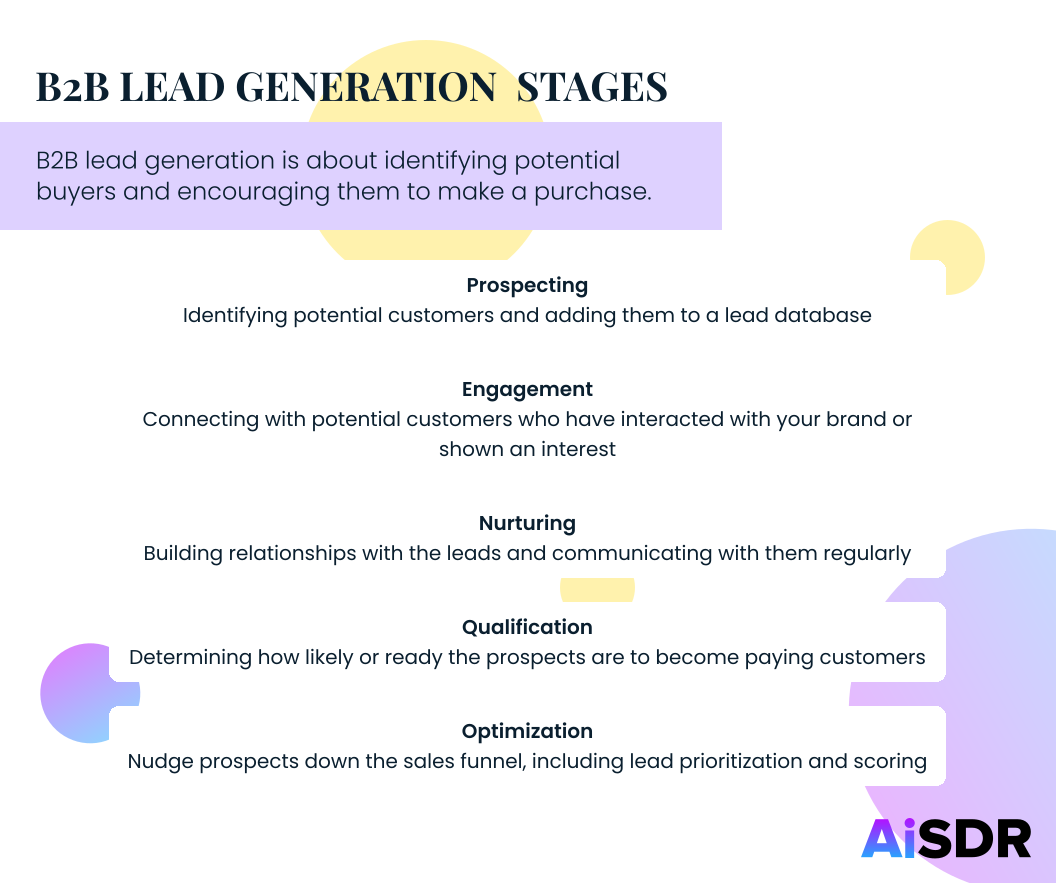
B2B lead generation is about identifying potential buyers and encouraging them to make a purchase. Your goal is to attract these prospects, bring them into the sales funnel, and nudge them along until they turn into paying customers.
Lead generation has the following stages:
What software should I use to automate B2B sales?
AI-powered sales enablement tools will help you automate tasks, streamline workflows, and reduce your sales teams’ workload. AiSDR, ZoomInfo, Mailtastic, Reachdesk, Trumpet, and Hotjar are some options worth exploring.
Subscribe to our Newsletter



Learn about the B2B sales process from stages of the B2B funnel to tactics and AI tools
 Summarize with
 ChatGPT
 Claude
 Perplexity
 Grok
Grok 
 Google AI