





How to Get B2B Leads That Actually Convert

Every sales leader wants more leads. But volume isn’t the problem.
Building a list is relatively easy with databases, scrapers, and social media. The real challenge is finding B2B leads that will actually become your customers.
Even if you have a long list, you won’t close many deals if you don’t know who’s ready to buy.
Here’s how you can get high-quality B2B leads using accurate data, smart strategies, and automation.
Key takeaways
- Lead quality matters more than volume. Large lists don’t help if prospects don’t match your ICP or aren’t ready to buy.
- Accurate data is critical. Outdated or incorrect contact databases lead to bad outreach, wasted resources, and missed opportunities.
- Combine ICP targeting with intent signals. Firmographics plus buying signals reveal prospects who are both a fit and actively exploring solutions.
- Use multiple lead channels. LinkedIn, email, and calling gives you a greater chance of successfully engaging a lead.
- Measure lead quality with the right KPIs. Track value metrics like reply-to-demo ratio, pipeline conversion rate, and cost per qualified lead. Open rate is just a vanity metric.
Why most B2B lead generation fails
Improving results starts with understanding why so many lead generation efforts fall short. The symptoms show up in low reply rates and weak pipelines, but the real issues sit deeper.
Relying on outdated databases
One of the biggest reasons teams struggle to get B2B leads that can actually buy is that too many of them work from stale or inaccurate contact databases. What looks like a long list on paper can be full of people who have changed roles, left the company, or were never the right audience to begin with.
HubSpot’s 2025 State of Sales Report shows that the top reason deals fall through is poor product fit, cited by 37 percent of surveyed salespeople.
This means weeks of outreach and hundreds of messages can end with no closed deals because the database is flawed and you’re targeting the wrong leads. The work keeps piling up, but the results don’t.
Over-automating the outreach
Automation is great for scaling outreach, but without balance, it won’t help you get B2B leads that convert. You still need people to shape the ICP, guide the strategy, explain the value proposition, and handle complex questions from prospects.
If everything runs on autopilot, you risk sending generic messages that never resonate or, in the worst case, losing prospects who might have been interested but get annoyed by irrelevant outreach.
Lacking the ICP alignment
To get B2B leads who are ready to take action, you need strong ICP alignment. In practice, this means focusing on accounts that meet your criteria and building outreach that speaks to their specific challenges.
If your list doesn’t match your ICP, no amount of outreach will turn those contacts into real deals. Your team will just end up wasting hours on accounts that have no problem you solve, no budget to act, or no authority to move forward.
Missing time-sensitive signals
Most markets are full of similar offerings, so people research fast, compare options fast, and forget vendors just as fast. A lead who seemed engaged last week may barely remember your company today.
That’s why catching buyer intent in real time matters. When you miss intent signals like website visits, pricing page views, case study downloads, or LinkedIn activity, warm leads slip away before your team ever gets the chance to connect.
How to build a predictable B2B lead engine
With the problems on the table, the next step is understanding how to fix them and get B2B leads who are interested in buying from you. Here are the main steps to take.
Define your ICP with data, not intuition
You might have a gut feeling about who needs your product. But even if that instinct works in a specific case, it won’t help you build a predictable and stable B2B sales engine.
Your ICP is the foundation of every outreach campaign, and it needs to be grounded in real data. This means analyzing your best customers, spotting patterns in past conversions, and reviewing win-loss insights to understand what consistently results in closed deals. The findings will show you who to prospect to get quality B2B leads.
Layer firmographics and intent signals
Your ICP shows the types of buyers who are worth targeting. But to close deals, you need to find the real people who match it. That starts with filtering your contact list by firmographics, which include:
- Industry and location
- Company size and ARR
- Buyer role
- Tech stack
Firmographics help you shortlist accounts that are likely to be interested in what you sell. But even ICP-fit prospects aren’t always ready to buy. That’s where intent signals step in, such as:
- Pricing page visits
- Case study views
- LinkedIn engagement
Harvesting these signals surfaces accounts that are actively exploring solutions like yours. When you add them to your firmographic filters, your targeting becomes more precise, and your chances of getting B2B leads that move the pipeline increase.
Align sales and marketing outreach
For your outreach to be successful, your sales and marketing teams need to work from the same playbook. And this only happens when:
- Marketing sets the foundation for outreach, so the messages prospects see in ads, content, and campaigns match what they hear from sales
- Both teams use a shared database and coordinated workflows, so marketing messages reflect a prospect’s past interactions with sales and vice versa
When prospects hear one clear and consistent message from your company, they move from awareness to conversation to deal with far less confusion and fewer drop-offs.
Validate lead data before launching the outreach
Remember when we talked about outdated data being one of the biggest reasons that lead generation fails? The easiest way to avoid that is to validate your lead data before you launch any outreach.
Validation means making sure the role is correct, the contact details are valid, the company fits your ICP, and the lead hasn’t already been contacted or disqualified.
It may sound like a lot of work, but it doesn’t have to be. With tools that run these checks automatically, like AiSDR, this task won’t clutter your team’s backlog.
Best plays for getting B2B leads
Building an effective lead engine is only half the job. The other half is sourcing prospects who can potentially become customers. And that task usually requires more than one channel.
Cold pitches
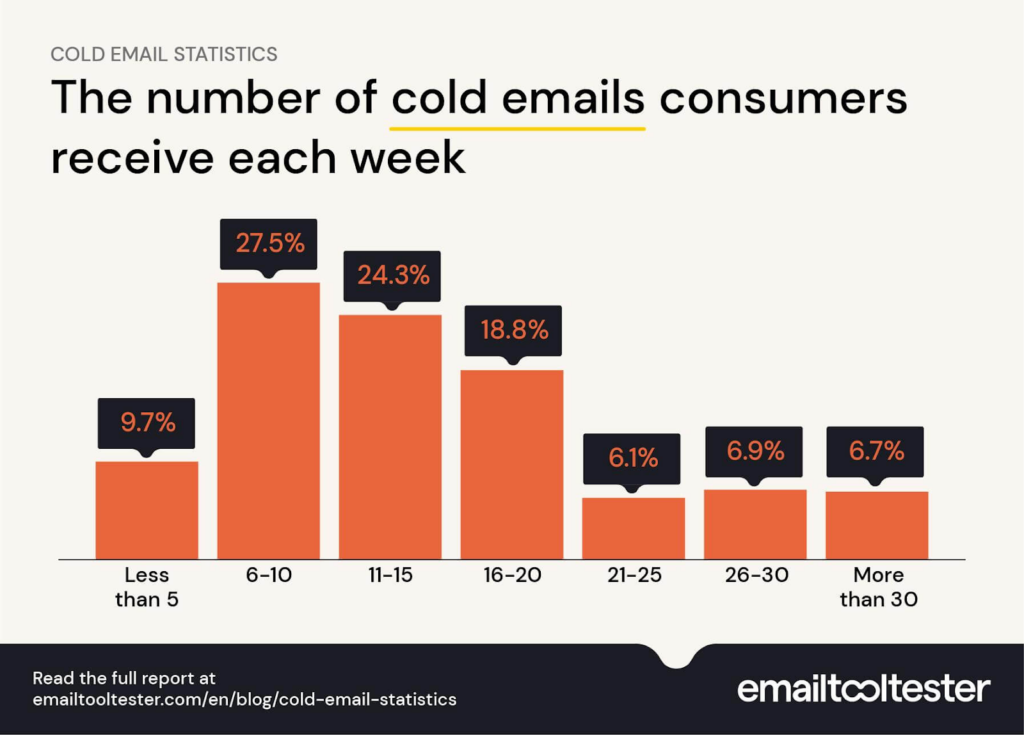
People receive around 15 cold emails each week on average, so reaching your audience through such pitches often gets competitive.
But when used correctly, this channel can still be one of the fastest ways to get B2B leads.
What does “using it correctly” mean? Targeting is the foundation, but message quality matters just as much. Your cold emails or LinkedIn messages need to be clear, easy to read, and directly relevant to the buyer’s needs.
When people get a message that speaks to a real problem they want solved, they respond.
Plus, when it’s done right, cold email is the most cost-efficient channel as you haven’t spent any money on ads and other paid acquisition.
Web visitor identification
Web visitor identification shows who’s browsing your website, even if they never fill out a form. It’s a powerful channel because you’re reaching people who have already shown interest (read your content, checked pricing, or explored product pages).
Many tools can identify website visitors, but two criteria matter most. First, choose platforms that support compliant web tracking. Second, look for tools that provide individual-level web tracking details, not just the company name, so you can reach decision-makers instead of wasting outreach on junior roles.
Warm-up and retargeting plays
Warm-up touches like showing helpful content or engaging with a prospect’s LinkedIn activity get your company in front of the right people before you reach out. Retargeting campaigns take it to the next step by focusing on prospects who’ve interacted with your company in some way, for example, visited a pricing page.
Both plays let you get B2B leads without increasing your outreach volume. That’s because you are contacting prospects who already recognize your brand or have shown interest, but they just were not ready to buy at that moment.
Social engagement signals
Social platforms like LinkedIn reveal a lot about what prospects care about and when they might be ready to buy. Likes, comments, shares, and profile views are all clear signals that someone is actively thinking about the problems your product solves.
When you keep an eye on this activity, you can spot people who are already showing buying intent, even if they have never interacted with your company before. Identifying these prospects and reaching out with a timely, relevant message can give you a steady stream of qualified B2B leads.
Ethical and compliant data scraping
Data scraping means pulling information from publicly available sources like websites and social platforms. While it often results in large amounts of unstructured and not always relevant data, many teams still use it to expand prospecting lists and learn more about their target audience.
Because scraping can sometimes be seen as a questionable practice, the key is to do it in a compliant and ethical way. That means collecting only public information, following platform rules, and avoiding any methods that violate privacy or terms of service.
Measuring lead quality, not volume
Now you know how to get more B2B leads, but lead volume alone won’t move your pipeline. To build efficient outreach campaigns, you need to measure lead quality using the right KPIs.
Reply-to-demo ratio
Reply-to-demo ratio shows how many of the people who reply to your outreach actually move to a meeting with a product demo.
To measure this KPI, divide the number of demos booked by the number of replies you received, and then multiply by 100%. For example, if 40 prospects replied and 8 of them booked a demo, your reply-to-demo ratio is 20%.
A high ratio means your replies come from prospects with real intent. A low ratio signals an issue with targeting, messaging, or the offer itself.
Pipeline conversion rate
Pipeline conversion rate measures how many leads move from one stage of the pipeline to the next. It tells you whether the leads you bring in have real buying intent or stall early.
The formula is similar: You need to divide the number of leads that converted to the next stage by the number of leads in the previous stage, then multiply by 100%.
If leads move forward smoothly, your lead generation and outreach are attracting the right people. Low conversion suggests issues with targeting, lead quality, or how early conversations are handled.
Cost per qualified lead
Cost per qualified lead (CPQL) shows how much you spend to get a B2B lead that actually meets your qualification criteria.
To calculate CPQL, divide the total cost of a campaign or channel by the number of qualified leads it produced. For example, if you spent $4,000 and got 40 qualified leads, your CPQL is $100.
If CPQL rises, it often means you’re using the wrong channels or attracting the wrong audience. To lower this cost, you need to tighten targeting, strengthen your message, or shift to channels that bring in better-fit leads.
With the right process and KPIs in place, the next step is using a tool that can run this engine automatically. This is where AiSDR comes in.
How AiSDR helps teams get B2B leads that convert
Getting B2B leads who have the potential to move from interest to deal takes smart discovery, accurate qualification, and high-impact engagement.
AiSDR offers this on one platform.
Live AI Search to find verified ICP matches
By using real-time signals, not some outdated lists, Live AI Search helps you find companies that actually fit your ICP.
Here’s how it works. You describe who you’re looking for in natural language, like “Fintech startups expanding into Europe.” AiSDR turns that into search criteria and looks at live signals (new hires, product launches, content engagement, website activity, etc.) to find matching companies. It also points you to key decision-makers.
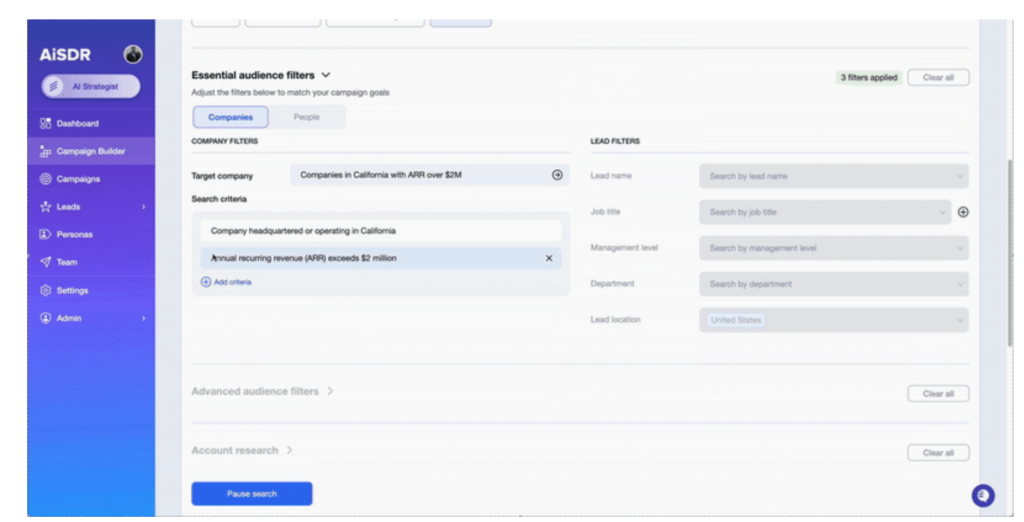
This gives you verified ICP matches based on what companies are doing right now, which means you get high-quality B2B leads for your outreach right away.
AI Scoring for precise lead qualification
AiSDR offers AI Scoring that reviews firmographics, intent signals, and engagement patterns like replies and link clicks to show you which accounts are worth pursuing and which ones aren’t.
It also lets you score any company list inside your HubSpot CRM by choosing the criteria you care about. The platform groups companies by how closely they match and explains why each one qualified, so you always know what triggered the score.
What’s more, AiSDR can handle qualification conversations to explore prospect needs further and surface real pain points.
By relying on AI Scoring, your team can spend time on accounts with real buying potential, not on leads that aren’t ready to move forward.
Smart sequences to drive engagement
AiSDR makes building outreach sequences simple. You just choose the channels you want to use, drag in the steps, set delays, and AiSDR creates the full sequence for you.
Once you launch it, the platform sends a unique, context-based series of messages to every prospect. Emails, follow-ups, LinkedIn requests, direct messages, likes, and even AI-generated videos or memes are tailored to what each buyer cares about.
Because every step is personalized, smart sequences consistently drive replies. It’s an effective way to engage prospects and get B2B leads with high potential to turn into customers.
Transparent data quality for proven results
AiSDR’s data quality is a big part of what makes it one of the best sales software on the market. The platform gives you access to a global database of more than 700 million contacts and adds new prospects from web visitor tracking, LinkedIn engagement, and Live AI Search.
To keep data accurate, AiSDR enriches each record with firmographics, intent signals, technology details, funding news, and hiring trends, so you instantly see whether a prospect fits your ICP. With reliable data behind every lead, you avoid wasting time on dead contacts.



Strategies to get high-quality B2B leads that convert into real deals
 Summarize with
 ChatGPT
 Claude
 Perplexity
 Grok
Grok 
 Google AI