









AiSDR vs HubSpot Breeze AI
TL;DR: Which one should you choose?
5 reasons to choose AiSDR over Breeze


With AiSDR, you don’t have to jump in the moment a prospect replies. AI answers questions, handles objections, qualifies interest, follows up, and keeps the conversation moving toward a meeting.
HubSpot’s Prospecting Agent runs outreach until a prospect replies or books. Once they reply, the agent’s outreach ends and the conversation moves back to your team.

AiSDR helps you avoid relying solely on email. You can run outreach across email, LinkedIn, and phone, and add video and voice notes when needed. That gives you more ways to earn a response without over-emailing the same inbox.
With HubSpot Breeze, Prospecting Agent sends emails only. HubSpot sequences can add LinkedIn and call tasks, but your team has to complete each step by hand.

AiSDR’s Ami, AI GTM Agent, can turn a plain-English ICP into a live prospect search. Fresh public context helps qualify accounts and keep outreach relevant, so you’re not limited to the contacts already in your database.
With HubSpot Breeze, you first define the buying signals, personas, and plays you want to use. That gives you more control, but it also means more setup before prospecting starts.

With AiSDR, your team handles the sending setup. They configure domains and mailboxes, manage mailbox warm-up, run deliverability checks, and monitor inbox health, so your campaigns are ready to send.
With HubSpot Breeze, your team still connects and authenticates the sending domain, warms up new domains, and monitors deliverability. HubSpot can automate dedicated IP warm-up through a paid add-on. The broader setup still stays with your team.

With AiSDR, you get a clear outbound plan before your team starts building. It uses learnings from 27 industries to shape the GTM play around your business and growth goal. Then it builds and launches campaigns for you.
With HubSpot Breeze, you can use Breeze Assistant to plan campaigns, create content, and coordinate agents. But your team still has to decide whether that plan is the right outbound move for your market.



Feature-by-feature comparison

Independent SDR versus sales assistant
See the success stories of teams that turned to AiSDR


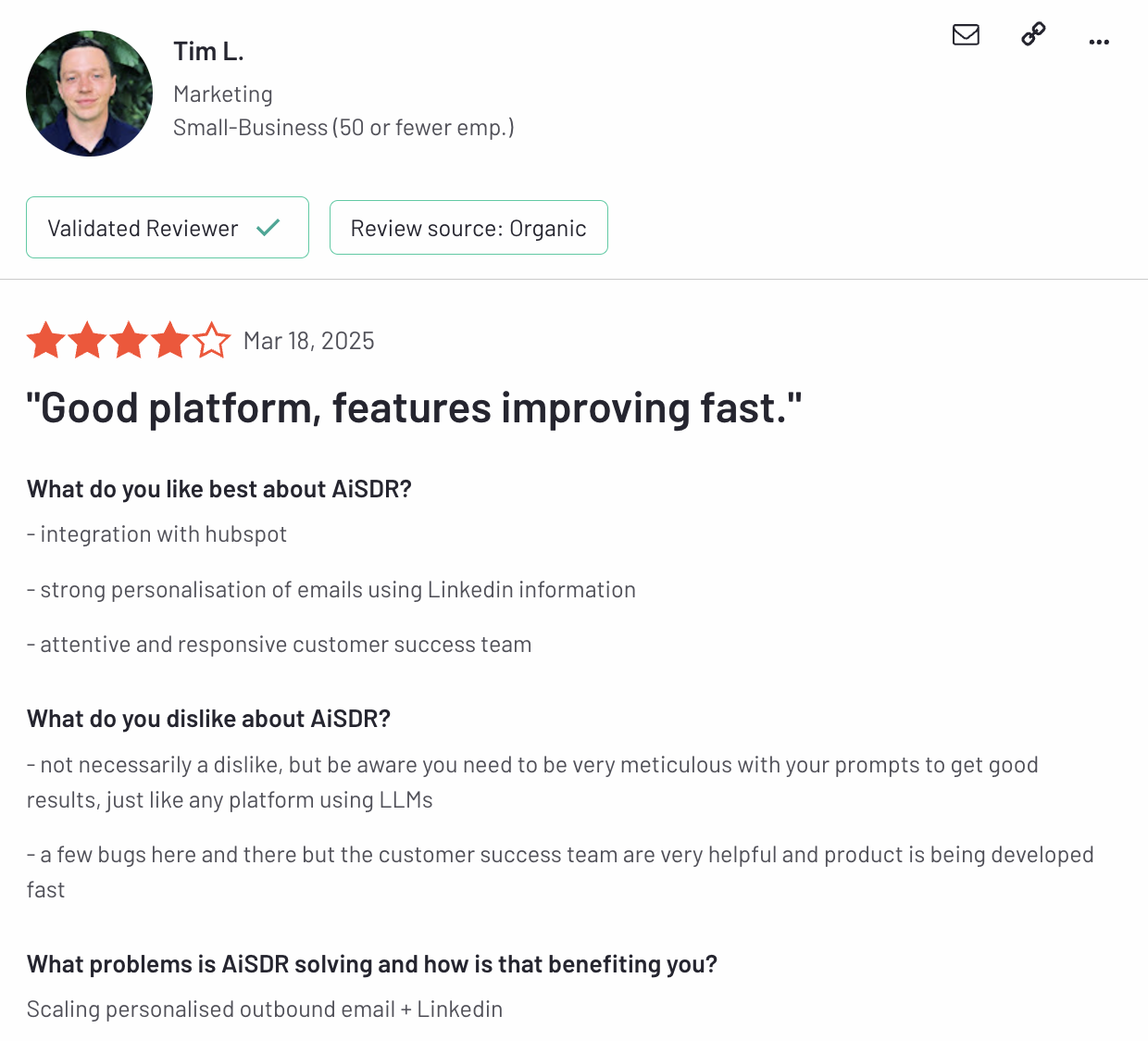
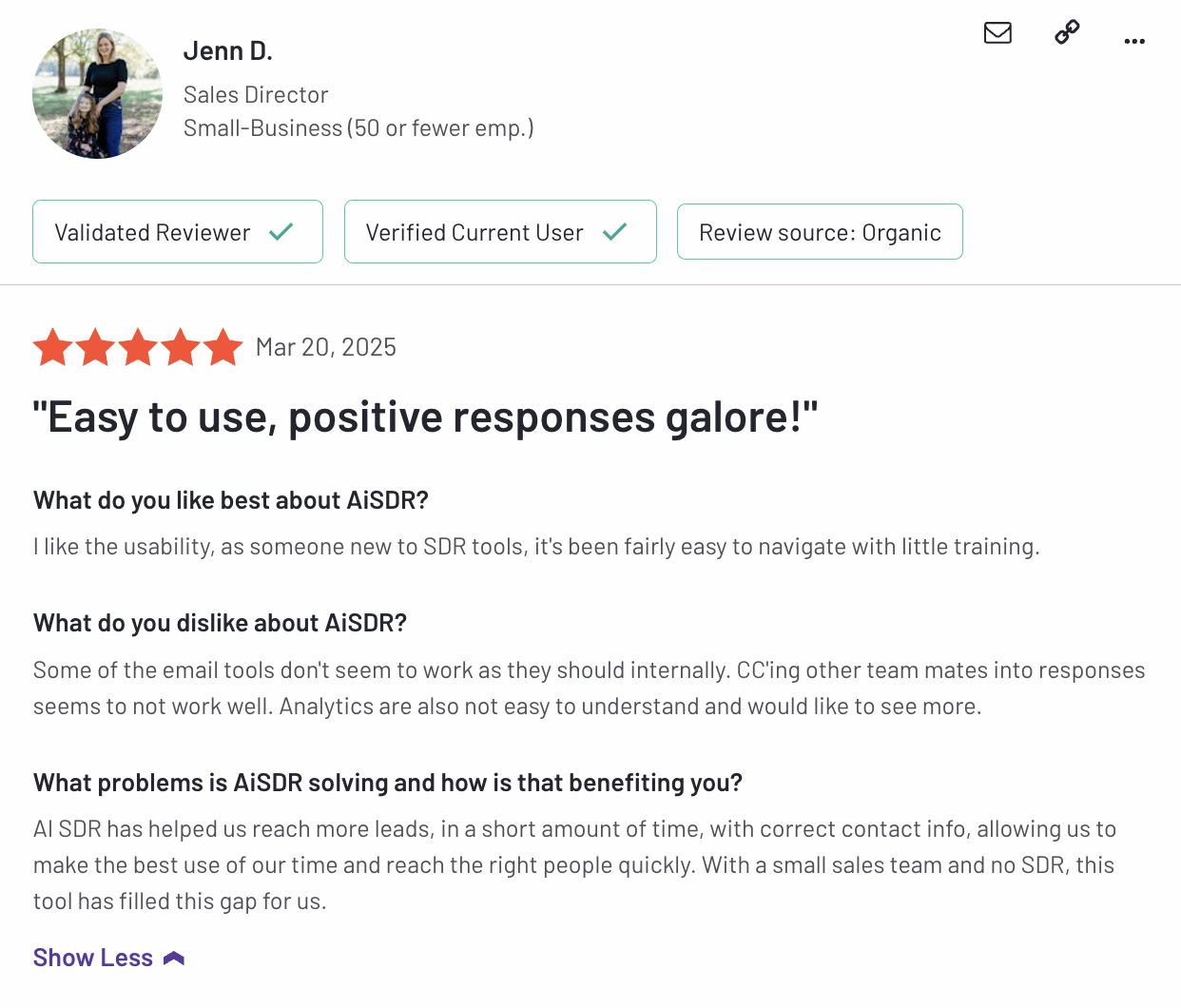
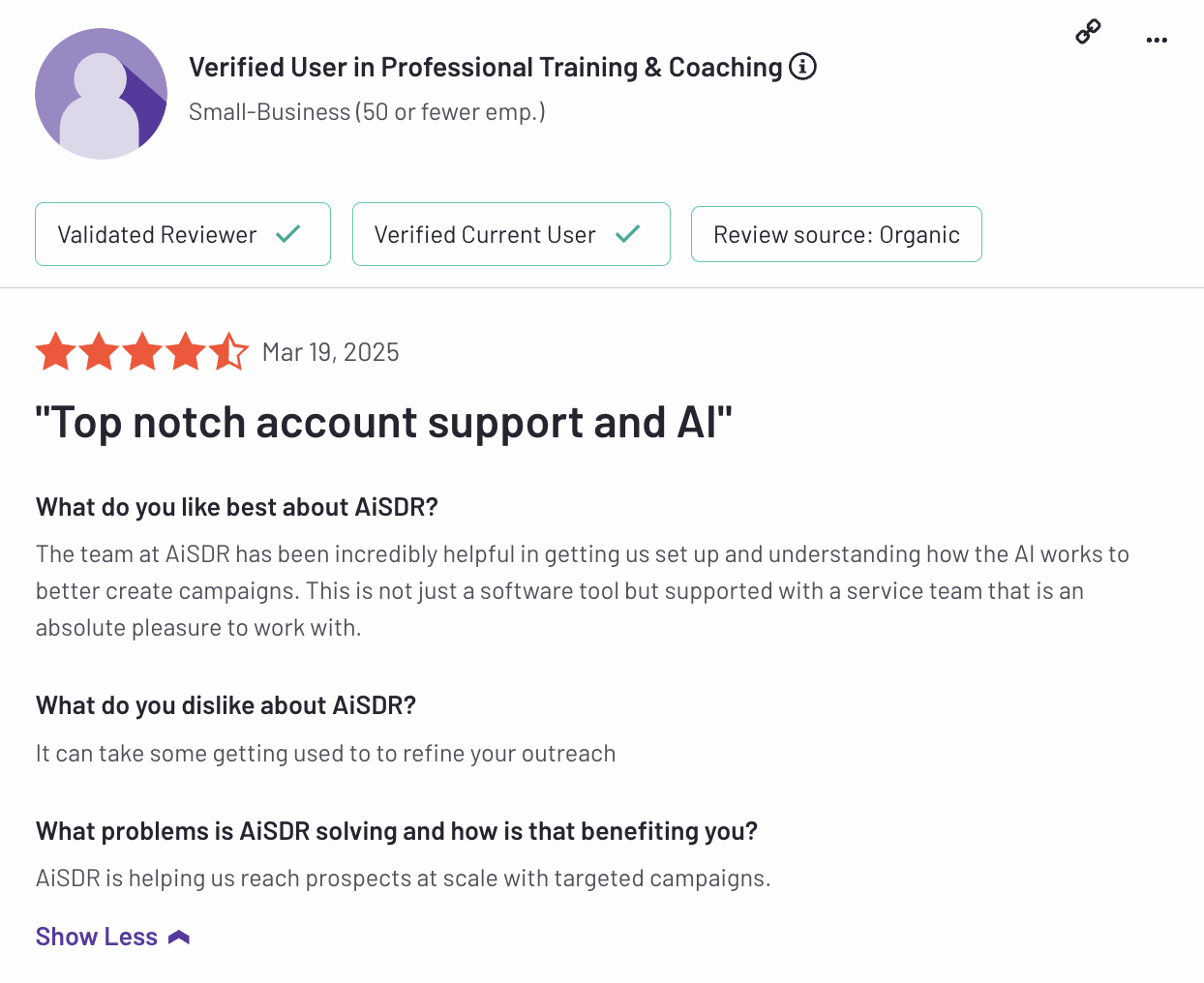
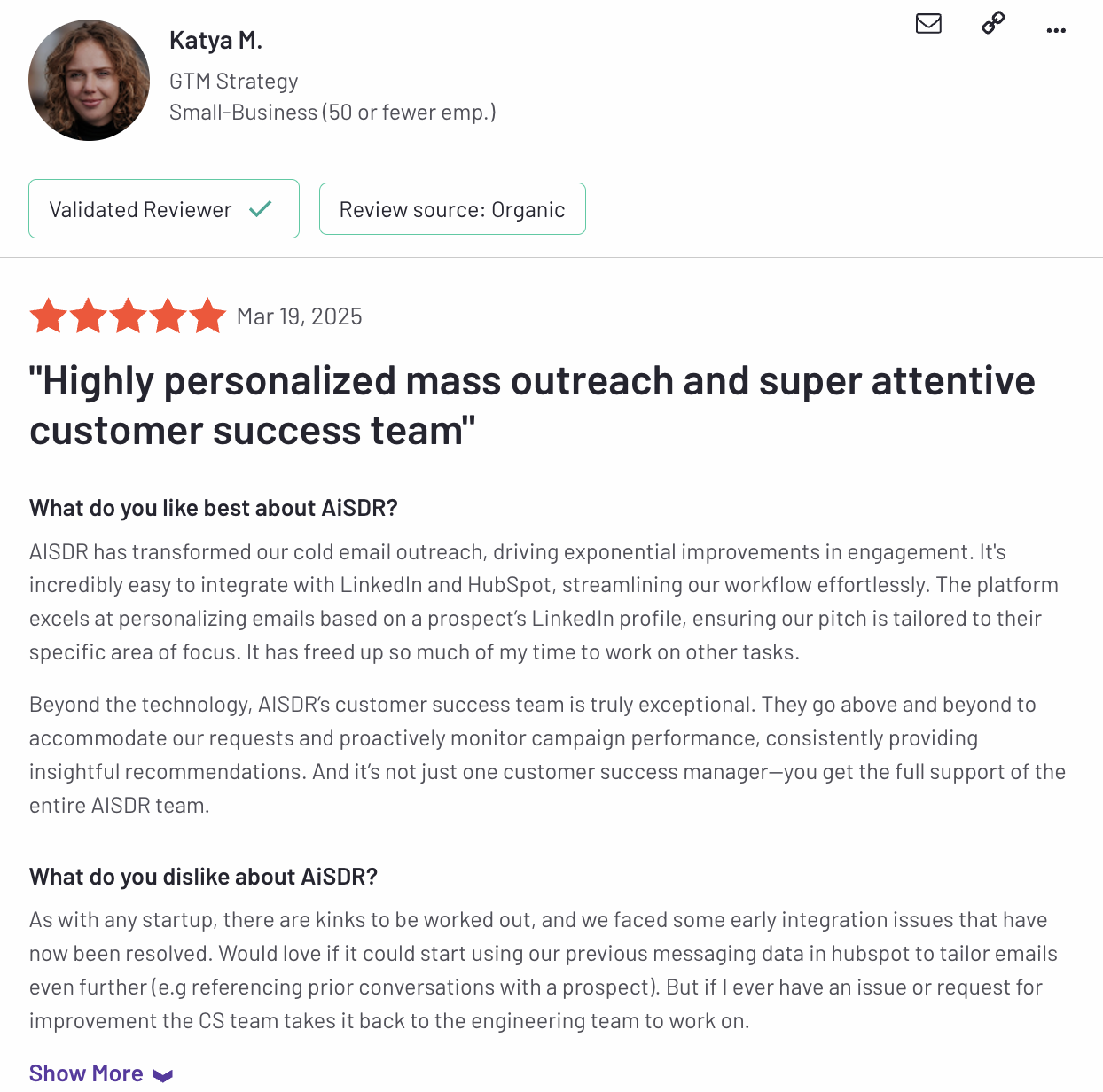
Check out real AiSDR emails and conversations
Frequently Asked Questions
What is HubSpot Breeze? 
HubSpot Breeze is HubSpot’s AI layer across its customer platform. Breeze Assistant can take a goal and coordinate HubSpot agents to help complete the work. For sales, Prospecting Agent monitors 40+ buying signals, finds in-market accounts, builds buying groups, sources contacts, and drafts personalized outreach.
What is the main difference between AiSDR and HubSpot Breeze?
HubSpot Breeze helps teams plan work, find and research prospects, monitor buying signals, and draft outreach inside HubSpot. Prospecting Agent runs outreach until a contact replies or books a meeting, then your team takes over the conversation.
AiSDR goes further with Ami, your AI GTM Agent. Ami turns your goals, ICP, and website into launch-ready GTM plays in 30 minutes. AiSDR then runs multichannel outreach, handles replies and objections, qualifies interest, and works toward a booked meeting.
Does HubSpot Breeze support LinkedIn outreach?
Breeze Prospecting Agent focuses on email outreach. HubSpot sequences can include LinkedIn InMail and connection request tasks through the Sales Navigator integration, but reps complete those steps manually.
AiSDR runs automated outreach across email, LinkedIn, and calls in one flow.
Can HubSpot Breeze handle conversations like AiSDR?
Not in the same way. Breeze Prospecting Agent researches prospects and sends personalized emails until the contact replies or books a meeting. Once a reply comes in, the contact leaves the agent’s outreach flow and your team handles the conversation.
AiSDR can continue the back-and-forth autonomously, answering questions, handling objections, qualifying interest, and booking meetings.
What happens when I talk to Ami?
Share your website, ICP, and growth with Ami. It researches your business, finds campaign angles worth testing, and turns that context into launch-ready GTM plays in 30 minutes. From there, AiSDR can build the audience, research prospects, create the messaging, and launch outreach.
What happens to unused HubSpot Breeze credits?
Unused credits expire at the end of each month, You can’t roll them over or save them for busier periods. This means if you don’t use your full credit allocation, you lose that value.
AiSDR uses pay-as-you-go pricing at $1.50 per person contacted, with the full platform included from day one. Team plans are available for 1,000+ contacts per month, with predictable pricing, hands-on support, and up to 40% lower pricing per lead based on volume.
Can HubSpot enrich contact data automatically?
Yes. HubSpot can enrich CRM records, and Prospecting Agent can use buying signals and connected third-party providers to find and prioritize new contacts.
AiSDR also connects to HubSpot, but you can tell Live AI who you’re looking for in plain English. It searches public web data for matching prospects without requiring you to build the search from filters and signals first.
Is HubSpot Breeze limited to data already in my CRM?
No. Breeze uses your CRM activity and records, but it can also research companies, analyze websites, identify accounts through real-world buying signals, and source contacts for outreach. The buying-signals and contact-sourcing functionality is currently described by HubSpot as a beta.
Which platform has better personalization?
HubSpot Breeze personalizes outreach using CRM history, buying signals, company research, and external contact data. That gives Prospecting Agent strong context inside the HubSpot ecosystem.
AiSDR goes deeper on each prospect. It combines CRM history with live web and LinkedIn research, so messages can reflect fresh company updates, buyer context, and what’s happening right now, not just the data already sitting in your CRM or the signals you’ve configured.
Does AiSDR work with HubSpot?
Yes. AiSDR syncs two-way with HubSpot. It can use your CRM history, like past interactions and deal stage, and combine that with fresh web research to write messages that match what the buyer cares about right now. You get the CRM context plus real-time context in one flow.
Our AI landed
meetings for clients
with these giants
were out of reach