





How AI Lead Scoring Helps Sales Teams Focus on the Right Opportunities

Most sales teams don’t have a lead volume problem. What they have is a signal problem.
MQLs pile up. Teams work the lists. Yet conversion stays flat because the scoring model can’t tell the difference between someone who’s downloaded a whitepaper versus someone ready to buy.
Static rules don’t update. Gut feeling doesn’t scale. And a list of leads that look qualified on paper produces the same result as no list at all.
Here’s how AI scoring fixes that so you can build a stronger pipeline.
Key takeaways
- Traditional lead scoring fails because static rules can’t distinguish between a whitepaper download and a prospect ready to buy. Models go stale, bias shapes the criteria, and the system never learns from closed deals or lost opportunities.
- AI scoring replaces if-then rules with continuous learning, analyzing variables and updating lead priority in real time as new behavior emerges.
- Intent signals matter more than firmographics. A manager who spends 20 minutes on a pricing page today outranks a CEO who hasn’t opened an email in a month.
- The gap between a high score and a booked meeting depends on workflow. The best implementations trigger personalized outreach when a lead hits a threshold, without a manual handoff between scoring and execution.
Why traditional lead scoring falls short
Many sales teams still use a scoring system that acts like a rigid, decades-old recipe. It assumes every prospect follows the same path, but your buyers are far more unpredictable. Here’s why the old ways of lead ranking often leave your pipeline full of noise.
The static model trap
Legacy scoring is just an if-then flowchart gathering dust. You assign 10 points for a download and 50 for a demo, then hope for the best. This assumes buyer habits never change, so models get locked in place, unable to adjust to new market trends.
You end up with SDRs chasing “qualified” ghosts who simply checked the right boxes months ago.
Bias baked into manual scoring
When people set the rules, personal bias takes over. A marketer focuses on ICP fit, like industry, company size, and engagement score, while a sales rep chases anyone visiting your blog three times in a week.
This forces a choice between unreliable guesses and a rigid checklist that misses perfect opportunities. Your team either improvises or blindly follows a rulebook.
No learning from wins and losses
Old systems have no memory. When you close a massive deal, the scoring model doesn’t look back to see which behaviors mattered. It treats every new lead like a blank slate.
If your “top” leads fail to convert, a manual system has no way to course-correct. You’re stuck with broken criteria until someone manually rewrites the rules.
AI tools fix this. If the old way of lead scoring feels like navigating with a paper map in a storm, AI is a live GPS that reroutes you instantly when a road floods.
How AI reinvents lead scoring
AI doesn’t care about your preferences for job titles or company sizes. It learns from data. Instead of you telling the system what a good lead looks like, the system tells you.
Here’s what AI does.
Moves scoring from rules to real-time learning
Manual scoring adds and subtracts points based on simple actions. AI analyzes thousands of variables simultaneously and spots behavior clusters humans might miss, like specific sequences across channels.
It also updates continuously. If a new segment starts converting, the system adapts in real time.
Unifies signals across channels
Prospects download a whitepaper, see a social media post, and read a third-party review all in one afternoon. Traditional scoring struggles to connect these dots, especially when data lives in different tools.
AI pulls fragmented signals into a single view and weighs them intelligently. A high-intent action like a pricing-page visit lands harder than a social like, which is low-intent.
For example, AiSDR tracks engagement and account signals in real time. When a prospect shows sudden interest or a new stakeholder emerges, the system reprioritizes that lead instantly.
Improves via feedback continuously
AI’s superpower is learning from its mistakes. High-scoring leads that don’t convert? It adjusts. Patterns in closed deals? It strengthens them.
This creates a closed-loop system, where your win data feeds back into the top of the funnel, making the next batch of leads even more accurate. The system matures with your business, but only if AI feeds on the right data.
See the benchmarks that separate high-converting pipelines from noisy ones
The data that powers accurate AI scoring
AI isn’t a psychic. It’s a high-speed detective that needs specific clues. If your data is stale or out of context, don’t expect five-star recommendations on who to reach out to next.
The system only identifies winners if you feed it right.
Quality over quantity
“Garbage in, garbage out,” that saying still holds.
If your CRM is a graveyard of duplicates and [email protected] email accounts, the AI gets confused. It needs accurate inputs to spot buyer habits. 100 clean, updated records beat 10,000 ghost profiles. Keep your database tidy, or your scores will just mirror the mess you already have.
Connected CRM and engagement data
When your marketing tools and CRM speak to each other, AI tracks the entire journey. It sees a lead read your newsletter, click a specific link, then check out your “About Us” page. This connection helps the system separate real interest from accidental clicks.
Intent signals as the backbone
Job titles are fine, but it’s actions that tell the real story.
A CEO who hasn’t opened an email in a month is less valuable than a manager who spends 20 minutes on your pricing page today.
Intent signals power your scores. The system hunts for patterns like repeat visits, whitepaper downloads, or video views. It prioritizes people showing a desire to buy right now. Not those who just happen to work for a Fortune 500 company.
Clean data is only half the story. You need a system that knows what to do with it. Many tools claim they use “advanced AI,” but often that just means basic rules dressed up in a fancy logo.
How to evaluate AI lead scoring tools
Buying a tool based on a pitch deck is like buying a car for its paint job. You must look under the hood.
Here’s what to hunt for.
Transparency over black boxes
If a vendor calls their algorithm “secret sauce” they can’t explain, walk away. You deserve to know how the AI was trained and how it reaches its conclusions. A good tool shows its logic because when you understand the “why” behind a score, you trust the results enough to contact the lead.
Control and explainability matter
A score of 95 is meaningless without context.
Look for platforms that explain every rating clearly, showing which signals drove the score and why the timing is right. When your team understands the reasoning, adoption goes up and the score becomes a conversation starter and reason to reach out.
Seamless GTM integrations
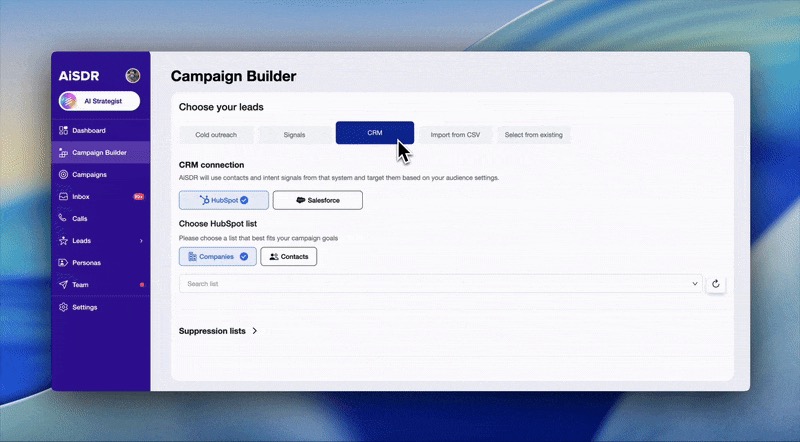
A tool that lives in isolation is a burden. Your scoring system must sync with your CRM and email sequencer without manual exports or clunky uploads. If setup requires a three-month engineering project, it lacks the flexibility a modern Go-to-Market team needs.
The best implementations route qualified leads directly into outreach campaigns without requiring manual handoff.
True multi-source data blending
The best insights hide in the gaps between platforms. Your tool should pull from website analytics, email engagement, and third-party intent data simultaneously. If a prospect downloads a guide and mentions a competitor on social media, the AI needs to see both. This unified view creates a much more accurate picture than any single data point could do alone.
Proof of ROI
Ask for evidence that the tool increases revenue. Fancy charts are nice, but more meetings and higher win rates are even nicer. Credible vendors should be able to share specific conversion benchmarks from their customer base, e.g. meetings booked per 100 leads, reply rates, pipeline impact.
For instance, AiSDR customers see a 2.4x revenue lift after 6 months and an average of 1-3 demos booked per 100 leads.
If a vendor can’t tie their solution to revenue wins, they might just be selling hype.
Support and adaptability over setup speed
A “5-minute setup” often leads to a 5-month headache.
Markets change. Buyer behavior shifts.
You need a team that tunes the engine as your strategy grows. A rigid system becomes dead weight the moment you launch a new product or target a different industry.
The best vendors operate more like partners than software providers, giving dedicated support that treats your pipeline like their own responsibility. That’s why AiSDR assigns every customer a dedicated GTM engineer.
Turning scores into sales action
AI tells you who to talk to, but your workflow determines when and how.
Here’s your to-do list to turn a passive list of names into a pipeline that moves.
Connect scores to workflows
Speed matters in modern sales. Your CRM should trigger an alarm, or your outreach tool should grab the lead the moment they hit a “buy now” score. Push your best targets to the front of the line so you can strike while the iron is hot.
Automate next-best actions
One size fits nobody, but AI can suggest the next-best action based on the criteria and data it gathered.
A score of 95 earns a personalized phone call and a custom video message. A score of 40 gets a helpful blog post sent via a nurture sequence. Sales teams who use these suggestions spend less time second-guessing, but still choose which play a lead enters.
Close the feedback loop
Your SDRs are the best teachers your AI will ever have. When a “hot” lead flops, the team marks it “disqualified” with a reason. The AI sees this and adjusts. It learns why that lead failed and stops ranking similar prospects so high.
This constant back-and-forth sharpens the system week after week. Sales input improves the tech, which then delivers better leads back to the sales team. Eventually, the benefits reach leadership and sales leaders stop playing detectives and start acting like strategists.
What sales leaders gain from intelligent scoring
Intelligent scoring shifts focus from activity to outcomes.
Here’s how it impacts your leadership.
Smarter prioritization
Leaders hear it constantly: Too many leads keep conversion flat. Without smart ranking, teams chase easy names or famous brands.
AI ranks by buying likelihood, so your top performers stop burning out on tire-kickers and spend energy on high-value conversations that close.
Faster follow-ups
When the system identifies a “buy” signal instantly, your team acts before the prospect even closes their browser tab.
You win in 3 ways:
- You convert more leads.
- You skip awkward 1-on-1s about hot leads sitting untouched. A live dashboard pushes the best deals to the top, building urgency without micromanagement.
- You stop demanding more calls and start handing reps targeted lists. This rewards effort and keeps morale high as they see their work turn into real commissions.
Predictable pipeline velocity
Data-backed scores remove the guesswork from your monthly forecast. Because you know each lead’s quality, you can accurately predict how many will turn into revenue. You stop relying on gut feeling and start delivering steady, reliable results that shine in quarterly reports.
The future of lead scoring is continuous
The world’s moving away from “set it and forget it” rules. The new standard for sales success relies on systems that never stop learning.
Here’s how lead scoring will look as the tech matures.
Context-driven prioritization
AI already uses context for cold outbound and inbound campaigns, but newer systems go deeper, tracking signals like hiring trends and tech stack changes all over the internet. This helps identify demand early, sometimes before a prospect even searches for a solution.
Always-on optimization
We move toward self-healing models that adjust their own weights. If certain industries stop converting or new ones gain traction, AI updates priorities based on recent wins and losses. This prevents your pipeline from becoming a graveyard of outdated assumptions.
From scoring to action
The gap between identifying a good lead and reaching out is already closing with AI SDRs. For example, AiSDR triggers personalized outreach based on why a lead scored high, sends follow-ups, and answers common questions like a human salesperson. As AI advances, these capabilities will only expand.
Give your sales team a scoring system that learns from every win and loss



See why static lead scoring fails and what AI scoring does differently
 Summarize with
 ChatGPT
 Claude
 Perplexity
 Grok
Grok 
 Google AI