





AiSDR vs Topo
TL;DR: Which one should you choose?
5 reasons to choose AiSDR over Topo


With Topo, databases refresh only periodically. If someone changed roles or left since the last update, you’re emailing outdated contacts. That means bounces, damaged sender reputation, and wasted touches.
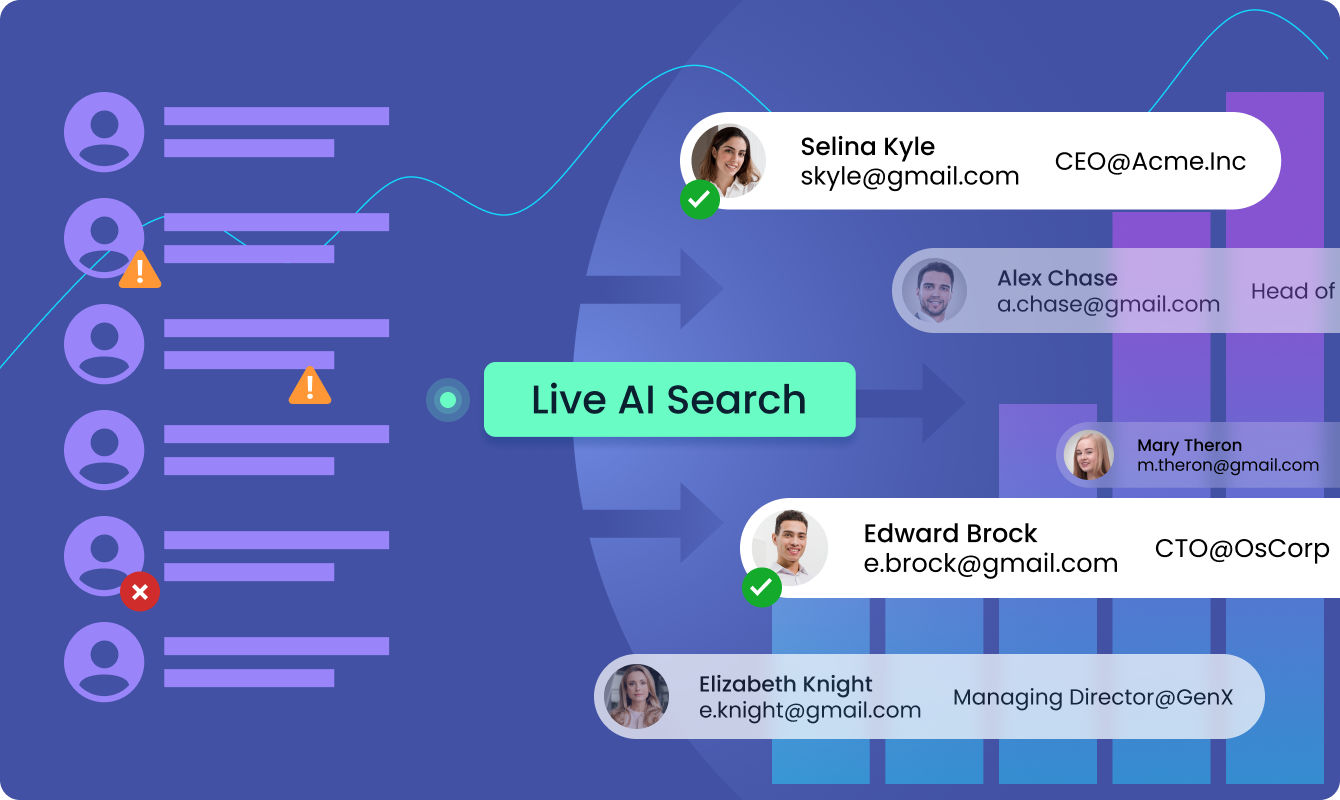
With Topo, the platform spots the signal and pings you in Slack for review. By the time you see the notification, the prospect may already have lost interest or moved on.
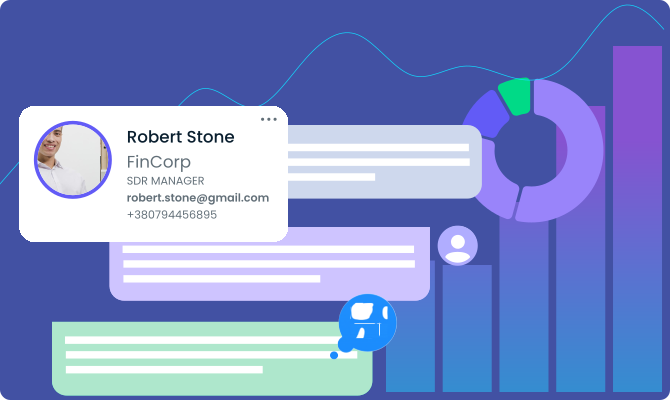
With Topo, you work with an Account Strategist over 2-4 weeks through workshops and ICP sessions to build campaigns. You get expert guidance, but launching new plays means scheduling calls or brainstorming on your own.
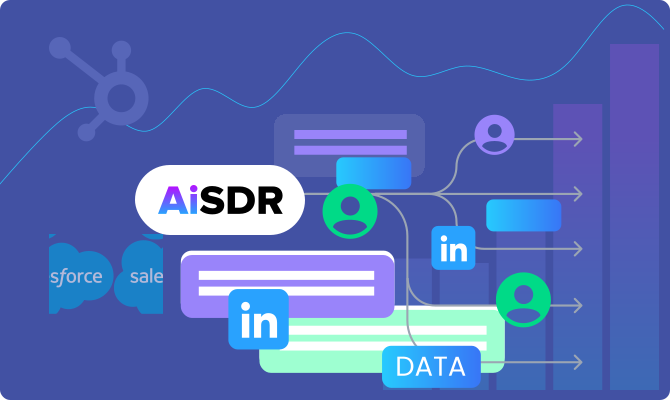
With Topo, you review and approve messages before they go out. This gives you control over every interaction, but it also means the AI can’t work while you’re in meetings, traveling, or focused on closing deals. Your outreach speed depends on how quickly you can review.
Topo focuses exclusively on outbound prospecting. For inbound leads, you need different tools or manual follow-up.
Feature-by-feature comparison

Same price, different results
See the success stories of the clients that switched from AiSDR to Topo


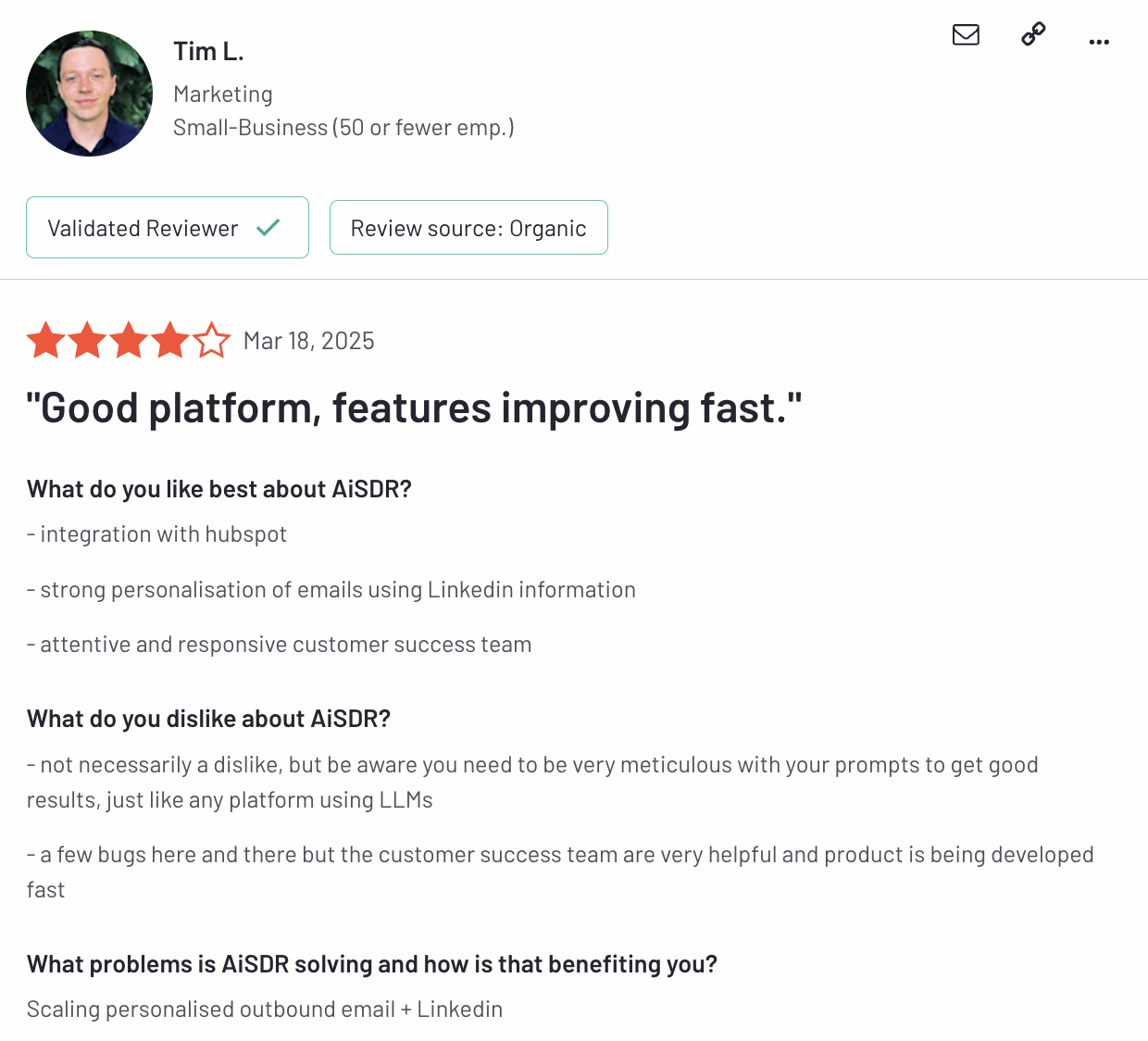
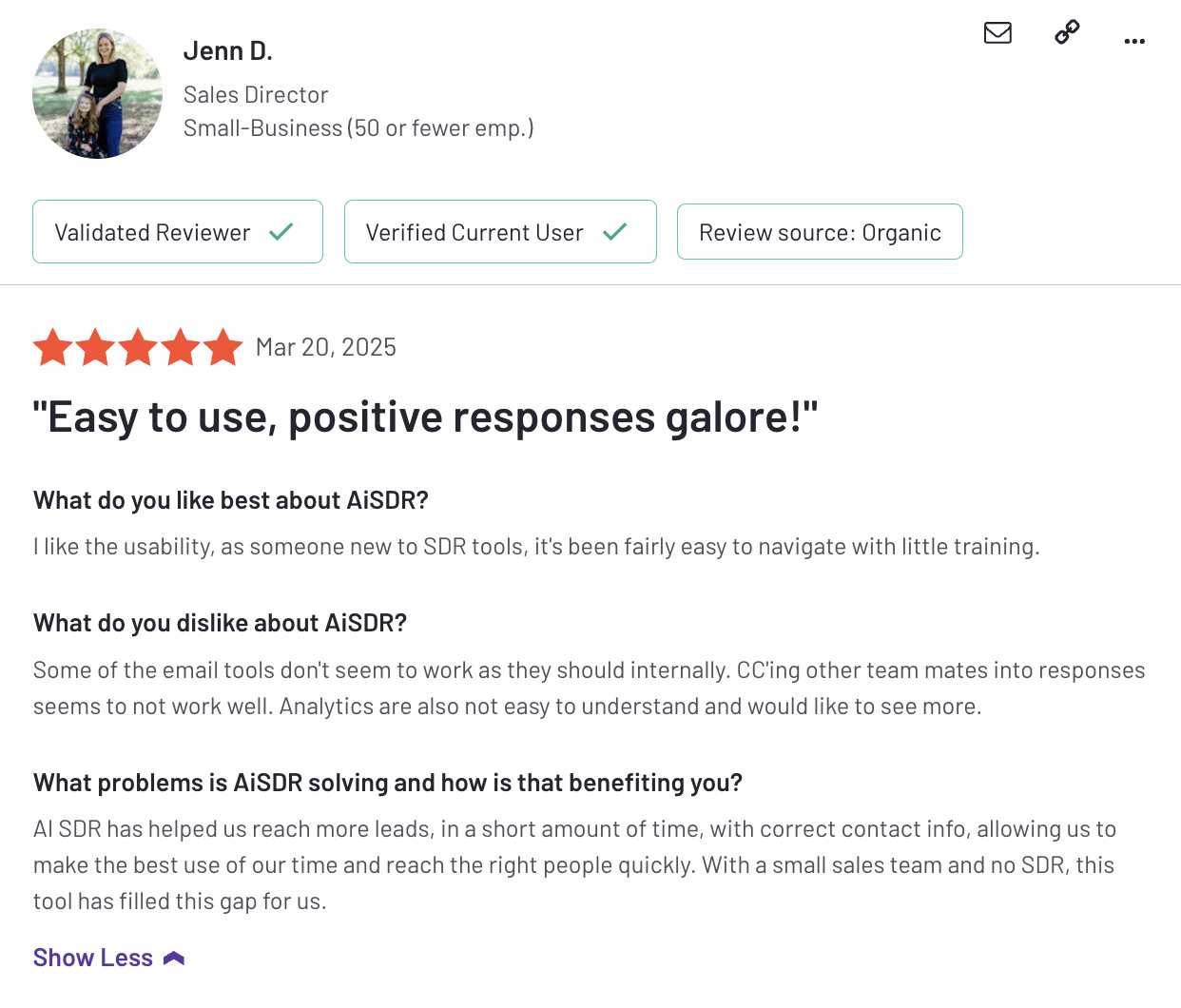
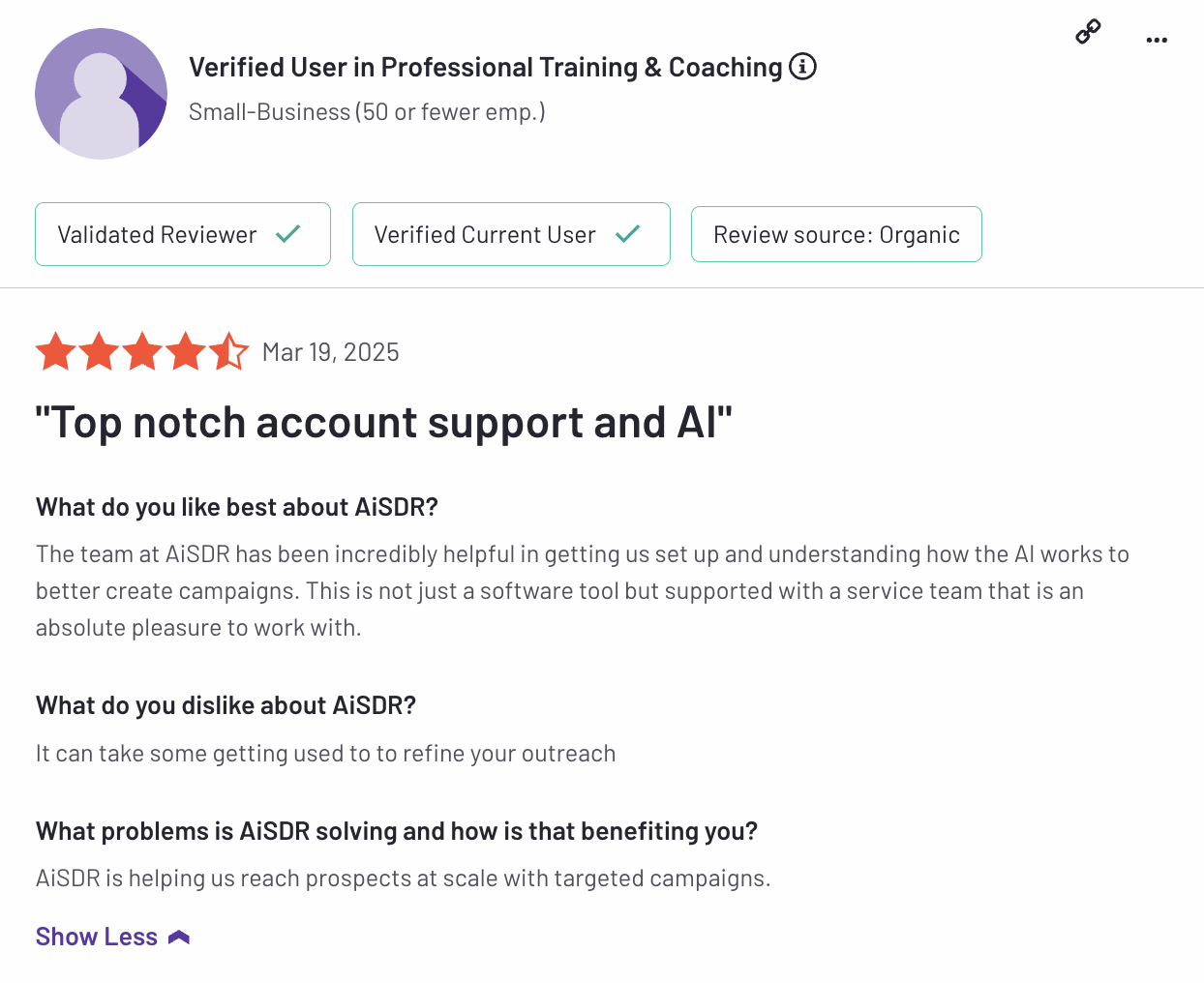
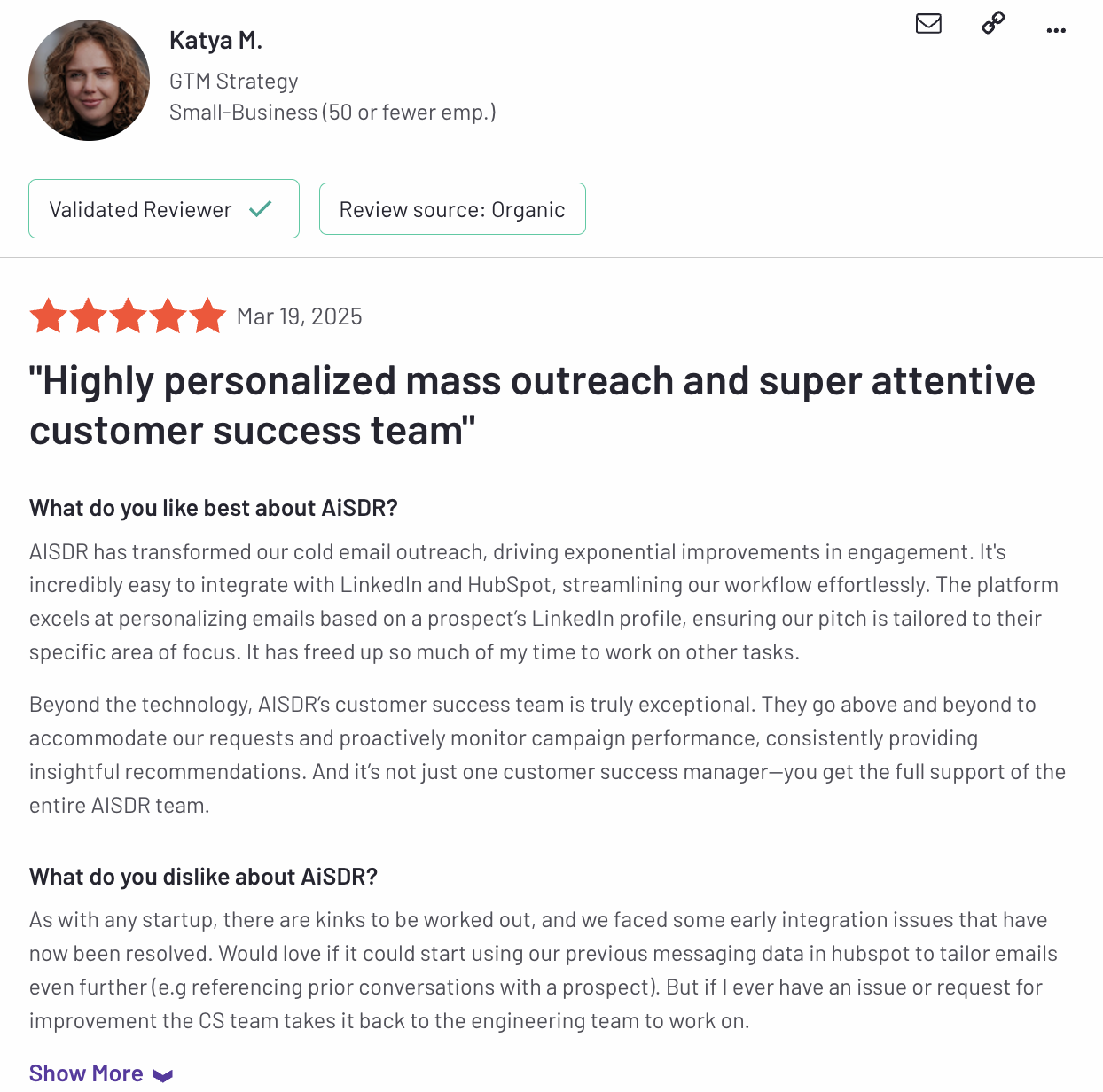
Check out real AiSDR emails and conversations
Frequently Asked Questions
What is Topo? 
Topo is an AI agent platform that automates outbound prospecting alongside your sales team. Their AI agents find leads, scrape intent signals, and launch multi-channel campaigns across email and LinkedIn. They integrate with Slack so you control the strategy while AI handles research, messaging, and follow-ups.
How does personalization work in AiSDR vs Topo?
By now, personalization has become a buzzword. What it actually requires is understanding what prospects need right now. AiSDR identifies in-market buyers automatically by scanning for intent signals across the web: LinkedIn activity, company news, job changes, you name it.
In contrast, Topo starts with templates and uses AI to drop in relevant details about each person. You get more control over structure, but can’t go as deep as building each message from scratch.
With AiSDR, best proof is the feedback from actual people (customers or not) on our Wall of Love page.
How do AiSDR and Topo handle email deliverability?
Getting messages into inboxes rather than spam folders requires proper domain setup, mailbox warmup, authentication protocols, and monitoring of sender reputation.
Both AiSDR and Topo handle deliverability infrastructure for you.
Topo’s “Premium Inboxes” service automates domain and mailbox setup, configures authentication records (SPF, DKIM, DMARC), manages AI-driven warmup that ramps up based on engagement data, and monitors domain health 24/7.
AiSDR provides full white-glove service, including domain purchase, mailbox creation, automated warmup, and weekly monitoring, with sends capped at 30 emails per mailbox daily and 100 per domain.
What’s the pricing difference between AiSDR and Topo?
Both start at $900/month, but they charge for different things because they focus on different value.
Topo charges per lead contacted (1,000 leads for $900/month). Their main deliverable is finding high-quality leads and getting you in front of the right people.
AiSDR charges per message sent. New leads are included each month aligned with your message volume, along with mailbox setup, domain warmup, and deliverability monitoring. The value is in what goes into each message: the research, the intent signals, the context, and the relevancy that makes your outreach stand out. A lot happens under the hood to craft messages that actually get responses, which is why pricing is based on message volume rather than lead count.
Do AiSDR and Topo send messages automatically?
Both platforms send campaign messages automatically once you’ve reviewed and launched them.
The difference is in ongoing conversations. AiSDR operates fully autonomously, handling replies, follow-ups, objections, and meeting booking without waiting for approval.
Topo emphasizes a “human-in-the-loop” approach with copilot mode through Slack and Teams, where the AI can draft responses but gives you control over lead quality and messaging. This gives you more oversight but can slow down response times.
Since responding within minutes versus hours significantly impacts conversion, autonomy matters when speed is a priority.
How does setup time compare between AiSDR and Topo?
AiSDR takes 5-7 days with white-glove onboarding. This includes technical infrastructure setup (domain configuration, mailbox warmup) handled by the team, plus onboarding support from a GTM Engineer who helps you understand the platform. You build your own campaigns or let AI build them for you, with guidance available when you need it.
Topo can launch campaigns quickly once configured, but users report that setting up sequences, customizing templates, and tuning the AI agent requires hands-on work and can be less beginner-friendly.
The difference comes down to technical setup time versus hands-on configuration complexity.
What channels do AiSDR and Topo support?
AiSDR supports email, LinkedIn (DMs, InMail, connection requests), phone calls (via Aircall integration), plus AI-generated videos, voice notes, and memes, whereas Topo covers email and LinkedIn only.
The difference matters if your strategy relies on breaking through inbox noise with multiple touchpoints.
What CRM integrations do AiSDR and Topo offer?
Both integrate with HubSpot. AiSDR also supports Salesforce (Topo’s Salesforce integration is coming soon). The real question is what you can actually do with those integrations.
Topo offers a two-way HubSpot integration with pre-built reports, workflow templates, and automated triggers that plug right into your existing setup. If your team relies heavily on HubSpot’s workflow automation and wants everything to flow through one system, Topo is designed for that.
AiSDR uses AI to make your CRM data work harder. You can score entire HubSpot company lists in seconds to find which accounts are ready to buy, personalize messages using any property in your CRM, and let the AI enrich and update records as it discovers new information. AiSDR is built with deeply researched, relevant outreach in mind.
Can AiSDR handle both inbound AND outbound leads?
AiSDR automates both inbound lead nurturing and outbound prospecting in one platform, processing auto-replies, handling objections, and keeping every conversation alive.
Topo focuses on outbound only, finding and contacting prospects through multichannel campaigns. AiSDR covers both sides of the funnel while Topo specializes in outbound prospecting.
What support does AiSDR provide compared to Topo?
AiSDR provides 24/7 Slack support with an average 6-minute response time, plus a dedicated GTM Engineer assigned to your account for onboarding, campaign setup, and ongoing optimization.
Topo includes a dedicated account strategist and always-on Slack support focused on strategic guidance and campaign optimization. Both offer strong support, with AiSDR emphasizing round-the-clock technical availability and Topo providing strategic partnership.
What kind of results can I expect with AiSDR vs Topo?
Both deliver meetings. The question is how fast you get there and how much hands-on work it takes.
AiSDR clients typically see 5-8.5% response rates and book their first meetings within a week of launch. AI handles replies autonomously (responding in under 10 minutes) so conversations move fast. For example, Harmix booked 19 meetings in a quarter with a 52% reply-to-demo conversion rate.
Topo doesn’t publish benchmarks on their website, though client testimonials mention results from their intent-driven approach and hands-on onboarding process.
The difference comes down to speed vs control. AiSDR’s autonomy means faster response times, no approval delays, and meetings booked sooner. Topo’s human-in-the-loop approach gives you oversight but adds friction when prospects reply and expect quick answers.
If speed-to-meeting matters, autonomy wins. If you want to review every message before it goes out, expect slower results.
Our AI landed
meetings for clients
with these giants
were out of reach