










How I Think About Product Evolution

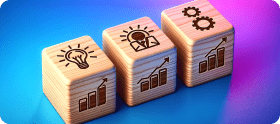
Building a product isn’t a straight line. It’s a cycle of discovery, constant iteration, and refinement.
At AiSDR, every stage of our product evolution has come from lived experience, customer feedback, and the willingness to keep evolving even when something “works”.
From solving my own pain as a founder to continuously refining what’s important, here’s how I think about product evolution, as well as how we approach it at AiSDR.
Step 1: Understand initial pain
Every great product starts with a pain point.
For AiSDR, that pain was mine.
At my previous startup, I was the one responsible for outbound since I was the founder.
I tried teams of SDRs. I tried outbound agencies. While each had its own approach, they all led to the same frustrations: manual work, inconsistent quality, and poor scalability.
That’s when I realized the problem wasn’t the people. It was the process. And that process could be solved with AI.
This insight became the foundation of AiSDR – an AI-powered system that could automate and improve outbound without sacrificing personalization or performance.
When your product solves a problem you’ve personally felt, you start from a place of empathy.
But that’s only the beginning.
Step 2: Talk to your customers relentlessly
Solving your own problem gives you an initial edge since you have knowledge and experience. But relying on your own insights alone limits your growth.
Because if you only build what you want, you’ll find yourself with a product that serves one customer – you.
That’s why continuous customer conversations are non-negotiable.
In the early days, I did this while in sales mode. I’d talk to prospects to understand their pain and tailor our product to their workflow.
Now, I do it through customer success so I can help existing clients get results while learning how we can improve.
Having these conversations regularly reveal patterns into what customers actually use, what frustrates them, and what they wish existed.
If you play your cards right, the feedback loop never stops. It’s how you evolve faster than your competitors and build something people need.
[Report] State of AI SDR Industry 2026
Step 3: Build out features
Once you’ve validated the pain and talked to customers, you should end up with a list of things to build.
In the AI space, feature breadth isn’t a luxury.
It’s a necessity.
To deliver consistent results, you need control over as many parts of the flow as possible. The more of the system you own, the more you can minimize human error while maxing your chances of a successful outcome.
At AiSDR, this meant expanding beyond just message generation into enrichment, sequencing, research, and signal-based outreach. Each feature brought us closer to one goal: making AI outbound fully autonomous and reliable.
Breadth gives you the ability to test.
But once you build wide, you’ll also have to learn to focus.
Step 4: Start cutting features when you have too many
This is often the hardest step, especially after investing so much time, money, and effort into building new features. It’s natural to feel attached to what you created, but that attachment can and will slow you down.
Feature creep is one of the easiest traps for startups to fall into.
As your product expands, you’ll notice that not every feature delivers equal value. Some get heavy use. Others barely make a dent.
That’s when it’s time to start cutting. Not just to simplify the product, but also to improve your cost efficiency and protect your runway.
At AiSDR, we frequently evaluate features and identify the ones that drive the most excitement, usage, and ROI for customers. Those are the ones we double down on.
The rest we de-prioritize or phase out entirely.
This discipline keeps the product simple, fast, and focused on outcomes. Not cluttered with options.
Because real progress isn’t just about what you build. It’s about what you choose to stop building.
Step 5: Internalize the most important pieces of software
In the beginning, APIs are your best friend.
AI SDRs can move fast by connecting best-in-class vendors for sending, data, enrichment, and signal tracking. But at some point, you outgrow the patchwork.
Once you know exactly what works and what customers are truly paying for, that’s when you start internalizing those components.
Bringing key systems in-house gives you full control over quality, reliability, and innovation.
At $5M ARR, you can afford to replace a vendor if something breaks.
At $100M ARR, you can’t.
That’s why we build with scalability in mind early on. If something becomes mission-critical, we make it ours.
Results
Product evolution never ends.
You identify pains, talk to customers, build features, cut what doesn’t work, and internalize what does. Then you start the cycle again.
That’s how you go from an idea born out of frustration to a category-defining company.
Because the moment you stop evolving, you stop growing.
More insights from the AiSDR leadership team:
Subscribe to our Newsletter



Find out how AiSDR evolves through pains, feedback, and focus
 Summarize with
 ChatGPT
 Claude
 Perplexity
 Grok
Grok 
 Google AI