





AiSDR Product Spotlight #33: Live AI Search

Effective prospecting starts with a clear picture of the people you want to reach.
At AiSDR, we’ve built search tools using filters, fields, and segmentation logic. These are still highly effective, especially when you know exactly what you’re looking for.
But we also recognize that prospecting doesn’t always begin with structure.
Sometimes, you want to describe your ideal lead in your own simple words and get results instantly. Without dropdowns. Without waiting.
So we thought: “How can we make that happen?”
And found a way.
Meet Live AI search: A more natural way to prospect
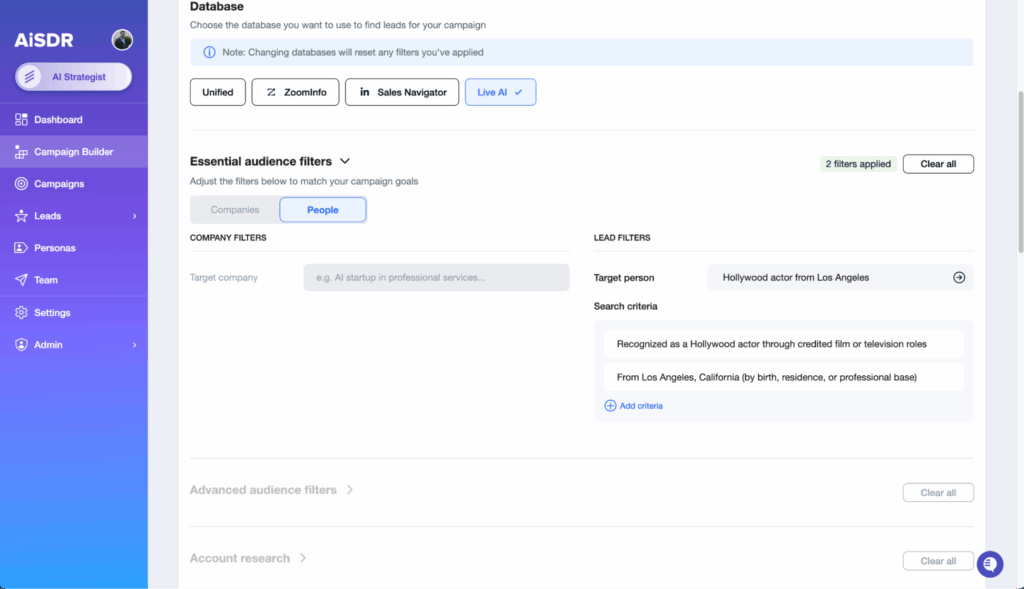
We didn’t add Live AI Search to replace filters, but to offer a different way of finding leads that is more intuitive and aimed at an individual lead in a specific niche.
Here’s how it works:
- Describe the lead in Target person in normal everyday spoken language.
e.g. “Looking for partnership managers at Series A AI startups in the UK. Ideally ones hiring sales engineers and integrating with Slack.”
- AI turns that line into up to 5 criteria: a lead must meet every chip to qualify.
- Add or remove criteria as needed, then hit Search to get verified names with proof (why they match the criteria).
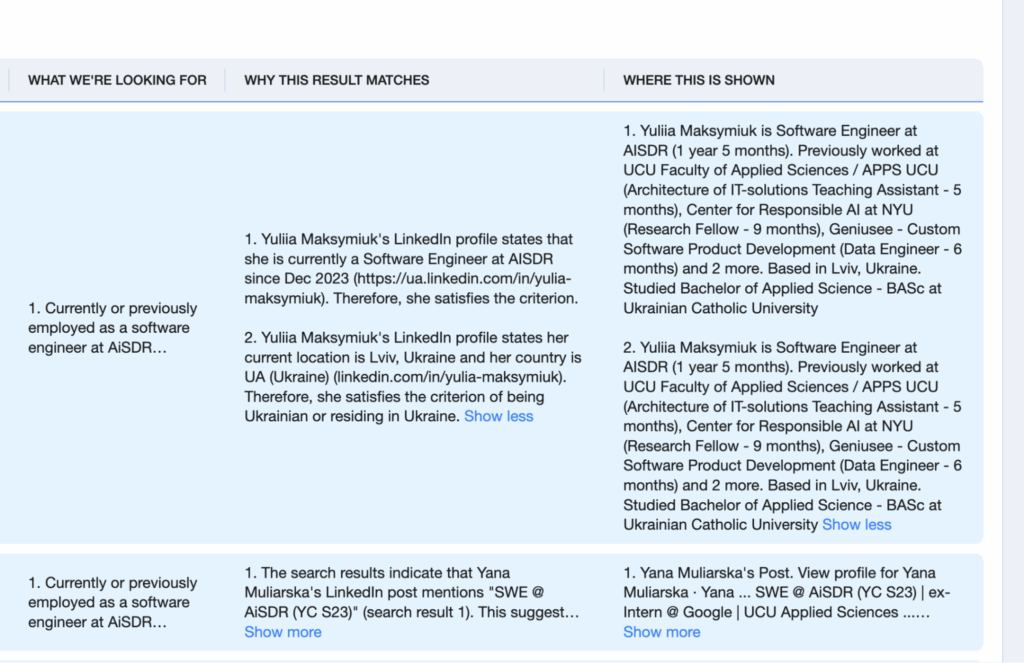
You can immediately drop them into your campaign while the data is still fresh and relevant.
Filters still rule, but now you have more ways to win
Structured search is still incredibly powerful.
When you’re working within clear parameters, like “SaaS companies,” “VP of Sales,” or “100 to 500 employees”, filters can quickly deliver reliable results. They become even more valuable when paired with intent signals such as hiring activity or product announcements.
But what happens when your idea doesn’t fit neatly into a form?
Sometimes you’re targeting:
- People with niche expertise
- Practitioners working on very particular problems
- Emerging job roles that don’t exist in predefined taxonomies
That’s where Live AI Search stands out.
It gives you the flexibility to explore ideas that would normally stay hidden behind rigid filters. You don’t have to choose between structured search and clearly expressed queries.
Now you can use both, depending on the moment.
So be specific
The best part about Live AI Search is that it works the way your brain already does.
Looking for:
- Tech-savvy influencers in the AI space who are actively creating content on LinkedIn, have 10K+ followers, and speaking at industry events?
- Product reviewers on YouTube who specialize in ecommerce tools?
- People with RevOps experience at fintech companies hiring in Seattle this month?
- Sales consultants who recently posted about using your competitor’s product?
You can ask for any of these, and AiSDR will surface the right people with full context, verified roles, and links to supporting information.
Note: The more specific you are, the more accurate your results. Just remember that higher specificity can reduce volume. It’s all about keeping balance.
Right lead. Right time. Right message.

Every moment you wait on static lists or exported CSVs, opportunity slips past.
Live AI Search ensures you’re working with fresh signals and recent data. Instead of digging through yesterday’s news, you’re building your list based on what’s happening right now.
You get:
- Real-time lists: Every search runs live, so you get a fresh list each time instead of waiting for a database update.
- Fully configurable filters: Anything can be a qualification parameter, from “posted a demo to Product Hunt” to “hiring sales engineers.”
- Deeper signals: Goes well beyond surface-level firmographics, pulling person-level clues from across the web.
- Precision when company intent fails: Perfect for teams whose prospects look “cold” at the company level but show real buying signals as individuals.
This is outreach with context. And context wins.
🤫 Next week’s sneak peek
Live AI Search is here to change how teams prospect. Stay tuned for more exciting updates 😉
Type what you want, get leads you need 🔎
More updates:




Check AiSDR’s newest way of finding leads using natural language and real-time data
 Summarize with
 ChatGPT
 Claude
 Perplexity
 Grok
Grok 
 Google AI