











The State of AI SDRs 2026: The Trust Gap Paradox

AI SDRs have graduated from experiments to strategy.
In 2024, the AI SDR market reached $3.1 billion, and 72% of sales teams reported using AI in outbound. The growth is undeniable, but there is a massive gap between usage and confidence.
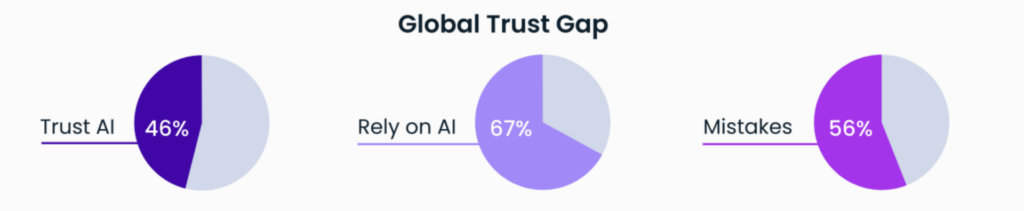
Only 46% of teams globally trust the AI they’re using.
This is the AI SDR trust gap:
Using AI without believing in it stalls pipeline growth and wastes investment.
Here’s what the data reveals.
The adoption-trust gap paradox
Here’s what makes this paradox so dangerous.
AI is working:
- 75% of sales leaders report positive ROI from AI investments.
- Teams are hitting revenue targets at higher rates than non-AI teams.
This makes the business case clear.
But…
- Nearly half of teams don’t trust AI.
- Two-thirds don’t verify outputs before using them (a contradiction that shows learned helplessness).
- Only one-third trust their own data feeding the AI models.
The result?
Teams are simultaneously over-relying on AI without verification and under-trusting it by hesitating, second-guessing, and manually overriding. They suspect something is not quite right yet lack the tools or understanding to verify it. So they cross their fingers and just hit send.
This isn’t a minor friction point. It’s a fundamental execution problem that determines whether AI becomes a force multiplier or an expensive distraction.
The trust gap didn’t appear by accident. It’s the natural consequence of how AI SDRs were deployed.
Adoption outpaced enablement
Between 2023 and 2025, AI SDR adoption accelerated faster than any sales technology in history. Teams went from 50% adoption to 72% in under two years.
But speed created problems:
- Reps were handed AI tools without training on how the technology makes decisions
- Managers tracked AI metrics without understanding which inputs drove results
- Leadership approved budgets without frameworks for measuring success and execution beyond vanity metrics
The technology matured faster than the humans using it.
The integration gap widened
Our AI SDR industry report found that 88% of AI pilots stalled before reaching production.
The reason? Fragmentation.
Teams stitched together point solutions:
- One for lead enrichment
- One for email sequencing
- One for personalization
- One for analytics
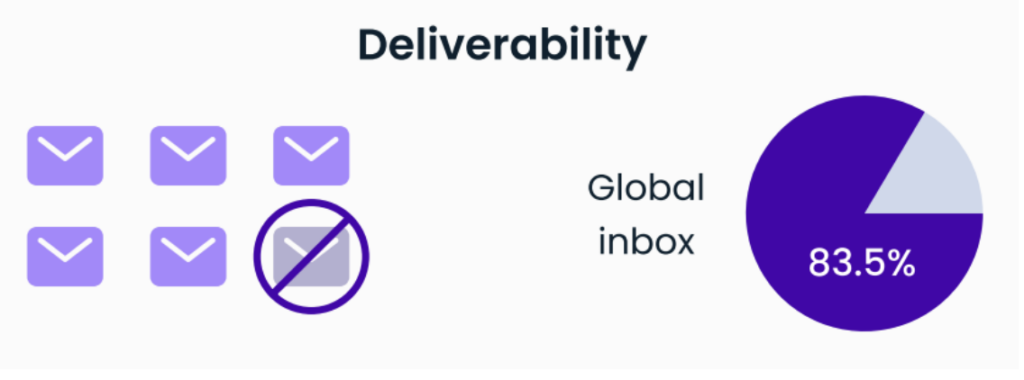
Each worked independently. None worked together. Data fell out of sync. Deliverability dropped (1 in 6 emails never reach their destination). Reply rates fell from 6.8% to 5.8%. And teams suffered countless headaches trying to balance their disconnected stack.
When systems don’t integrate, trust erodes. Reps can’t trace why something succeeded or failed. The system feels unpredictable. And unpredictable systems don’t inspire confidence.
Verification became impossible
This stat reveals the depth of the problem: 2 in 3 teams rely on AI outputs without verification.
Why? Because verification requires understanding. You can’t quality-check an AI-generated email if you don’t know what data it used, what angles it prioritized, or what tone guidelines it followed.
So teams stopped trying. They hit “send” and hoped for the best. And when things went wrong (deliverability issues, tone-deaf messaging, missed context), they didn’t know how to fix it.
The gap between usage and understanding became a chasm.
What the trust gap costs
This isn’t just a problem for a behavioral psychology major. It’s a revenue problem.
High-trust teams outperform low-trust teams across every metric:
- 83% of AI-enabled teams hit revenue growth targets (vs. 66% without AI)
- 75% report positive ROI from AI investments
- Only 4% report negative returns
But these results only materialize when teams properly trust and deploy their AI systems.
Low-trust teams experience:
- Slower time-to-value, causing pilots to drag on for months
- Higher error rates because no one catches mistakes before they go live
- More manual overrides, which defeats the purpose of automation
- Rep turnover, since no one wants to be held accountable for AI outputs they don’t control
The compounding effect is brutal.
High-trust teams learn faster, iterate faster, and scale faster. Low-trust teams stay stuck in perpetual pilot mode, never graduating to full production.
How teams are closing the gap
The good news: Teams are figuring this out.
Our report identified operational fixes that high-performing teams are using to stabilize AI SDRs and build trust through integration, transparency, and structured enablement.
We documented the specific processes, frameworks, and quality-control mechanisms that separate successful implementations from failed pilots.
We also built a step-by-step framework covering everything from preparation and vendor evaluation to integration and enablement. It includes the red flags that signal trouble early and a validation model to ensure ROI before you commit budget.
Six more findings you need to see
The trust gap explains why adoption doesn’t equal results, but it’s not the only factor.
Our 2026 State of the AI SDR Industry Report uncovered six other critical shifts, including:
- Why 88% of pilots fail
- The performance gaps separating winners from the rest
- What’s forcing teams to rethink their entire tech stack
When it comes to trust in AI, trust doesn’t come from believing in AI. It comes from systems that create visibility, control, and feedback loops.
The teams closing the trust gap aren’t the ones with better mindsets. They’re the ones with better infrastructure.
Get the State of AI SDRs 2026 report for more on AI in sales



Learn why the AI SDR trust gap exists and how to fix it in 2026
 Summarize with
 ChatGPT
 Claude
 Perplexity
 Grok
Grok 
 Google AI